
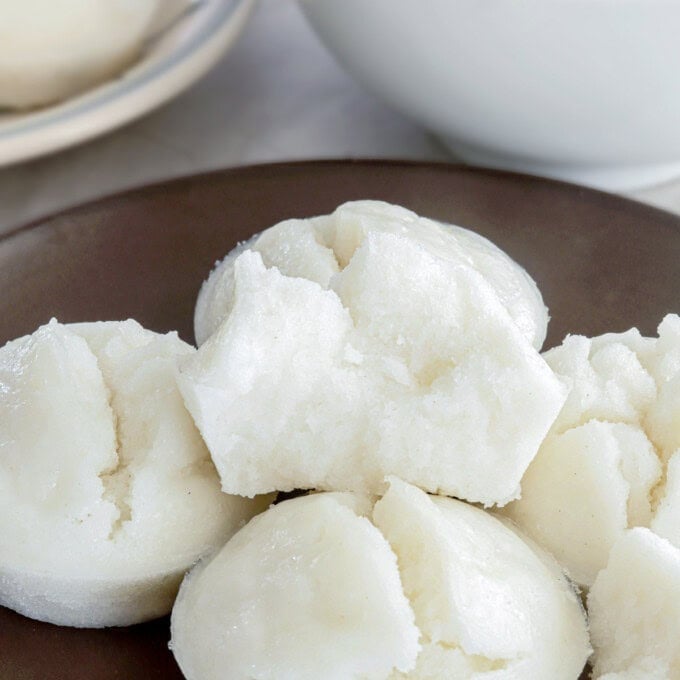
Puto Bigas, made with rice flour and coconut milk, are soft, fluffy, and tasty! These Filipino steamed rice cakes are delicious on their own or paired with savory dishes such as pancit and dinuguan.
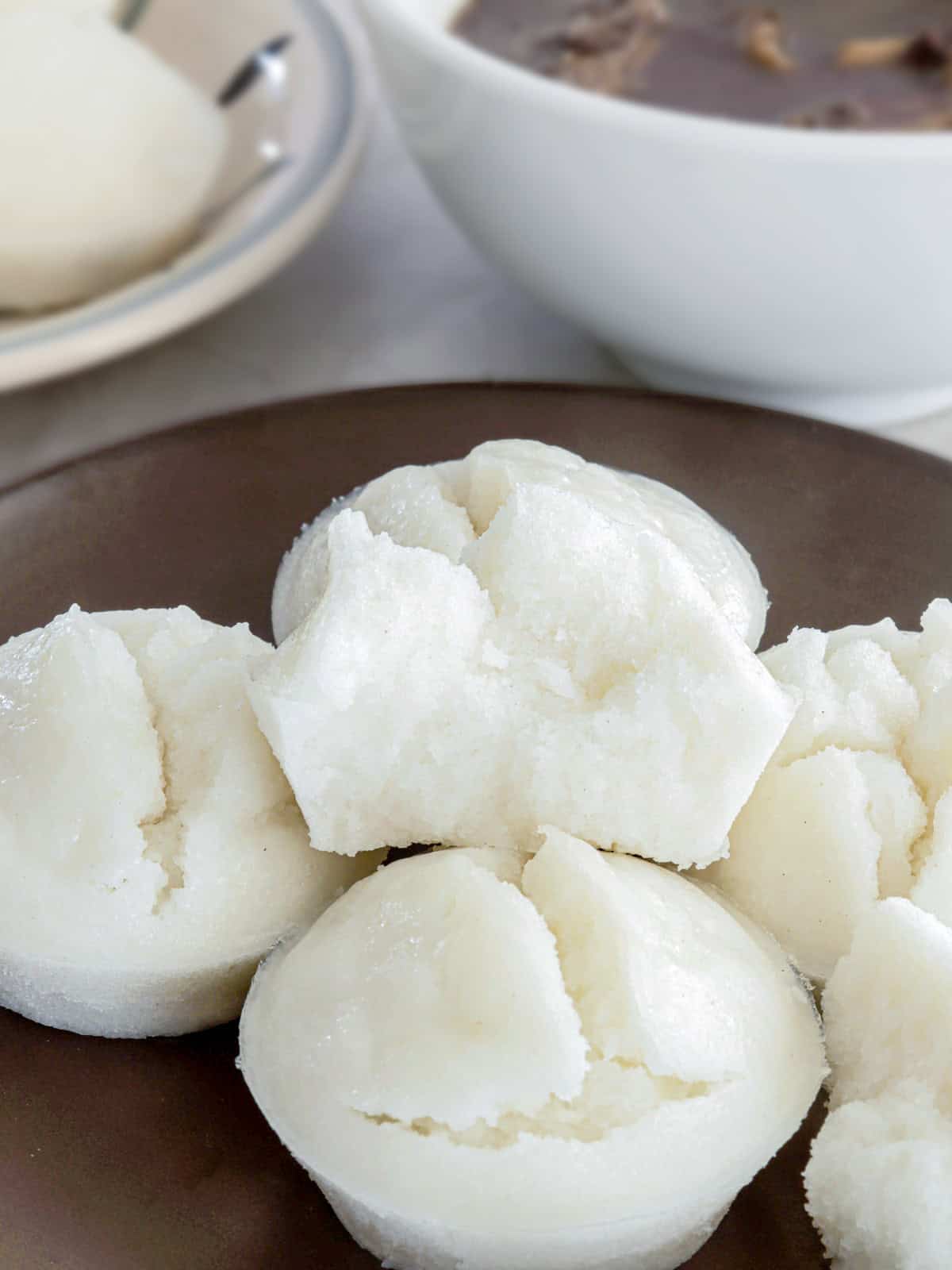
I have recipes for morcon and kilawing labanos atay ready to publish in my draft box, but since I posted my dinuguan a couple of days ago, I thought the best follow-up would be its perennial pair: puto. Because what's better to serve with hearty and savory pork blood stew than soft and fluffy steamed rice cakes?
What is Puto
Puto is a popular Filipino steamed rice cake usually enjoyed as a filling midday snack or as an accompaniment to savory dishes.
Although all-purpose flour, cake flour, or even hotcake mixes are used for puto cake or cheese puto, traditional putong puti is made by soaking rice grains in water overnight and then processing them into a smooth batter called galapong. The fermented rice batter is then steamed in banana-lined bamboo platters (bilao) or individual molds.
Leavening agents, such as baking powder or yeast, are used to give the batter a rise. Coconut milk provides moisture, while sugar adds sweetness, and a sprinkling of salt balances the flavors.
Over the years, home cooks have spun these native cakes into a wide variety of delicious dishes by adding pandan or ube extracts or by topping them with slices of cheese or salted duck eggs.
How to Make Puto with Rice Flour
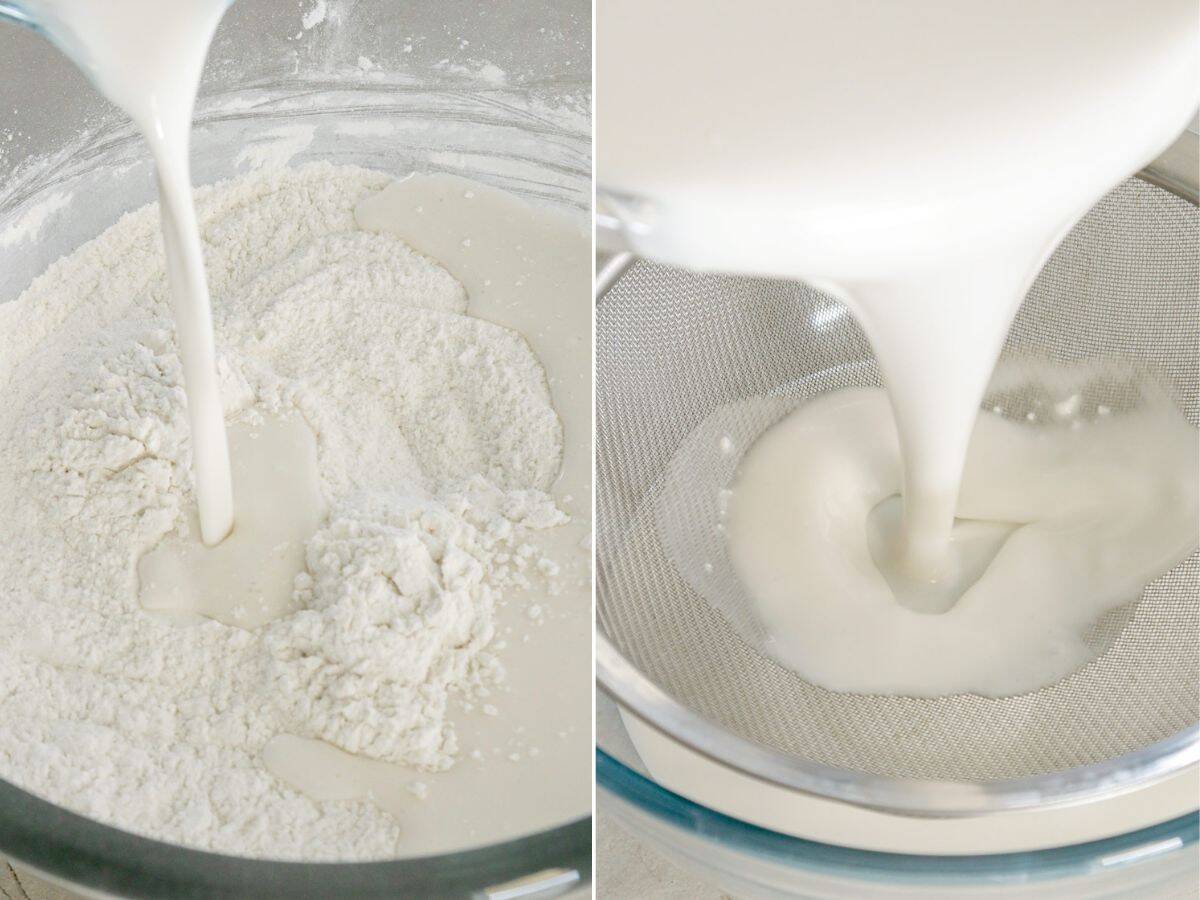
- Combine the ingredients in a bowl and stir until smooth and blended. Strain the mixture using a fine-mesh sieve to remove lumps.
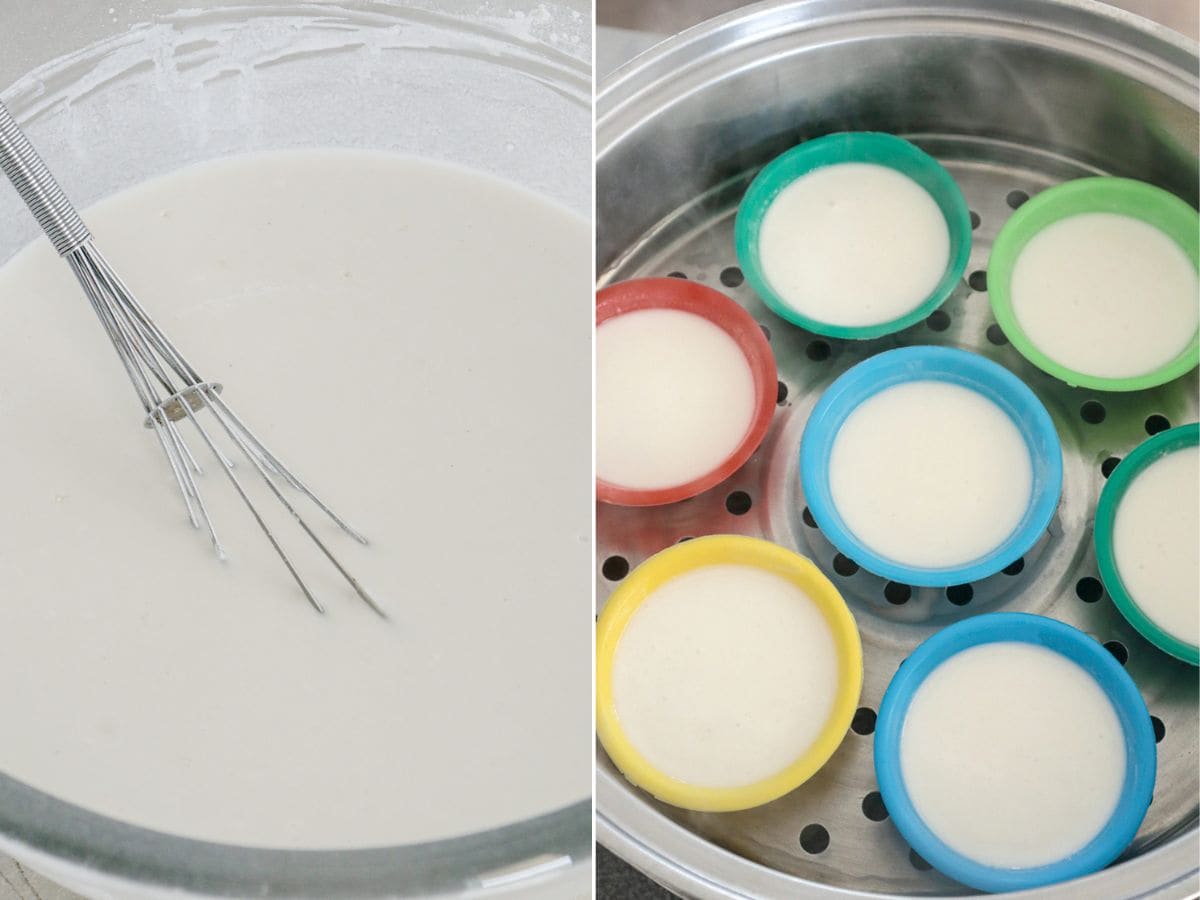
- While you can steam the rice batter as soon as you make it, I highly recommend refrigerating it first overnight before steaming. It makes for a softer, fluffier, and less crumbly texture.
- I find it unnecessary to grease the molds. Just allow the puto to cool enough before removing it from the molds to prevent it from falling apart.
- Cover the steamer lid with cheesecloth or another cotton material to prevent condensation from dripping onto the steamed muffins.
- Adjust the steam time based on the size of the molds or ramekins used. Check for doneness by inserting a toothpick in the center of the cake; if it comes out clean, the steamed cake is done.
Helpful Tip
To create the cracks on top, make sure the water is rapidly boiling before placing the puto in the steamer and steam on high heat.
Frequently Asked Questions
Is Filipino puto gluten-free?
It depends on the recipe. Some puto varieties are made with wheat flour, but this particular recipe for putong puti, or bigas, uses rice flour only and is gluten-free.
Serving suggestions and storage instructions
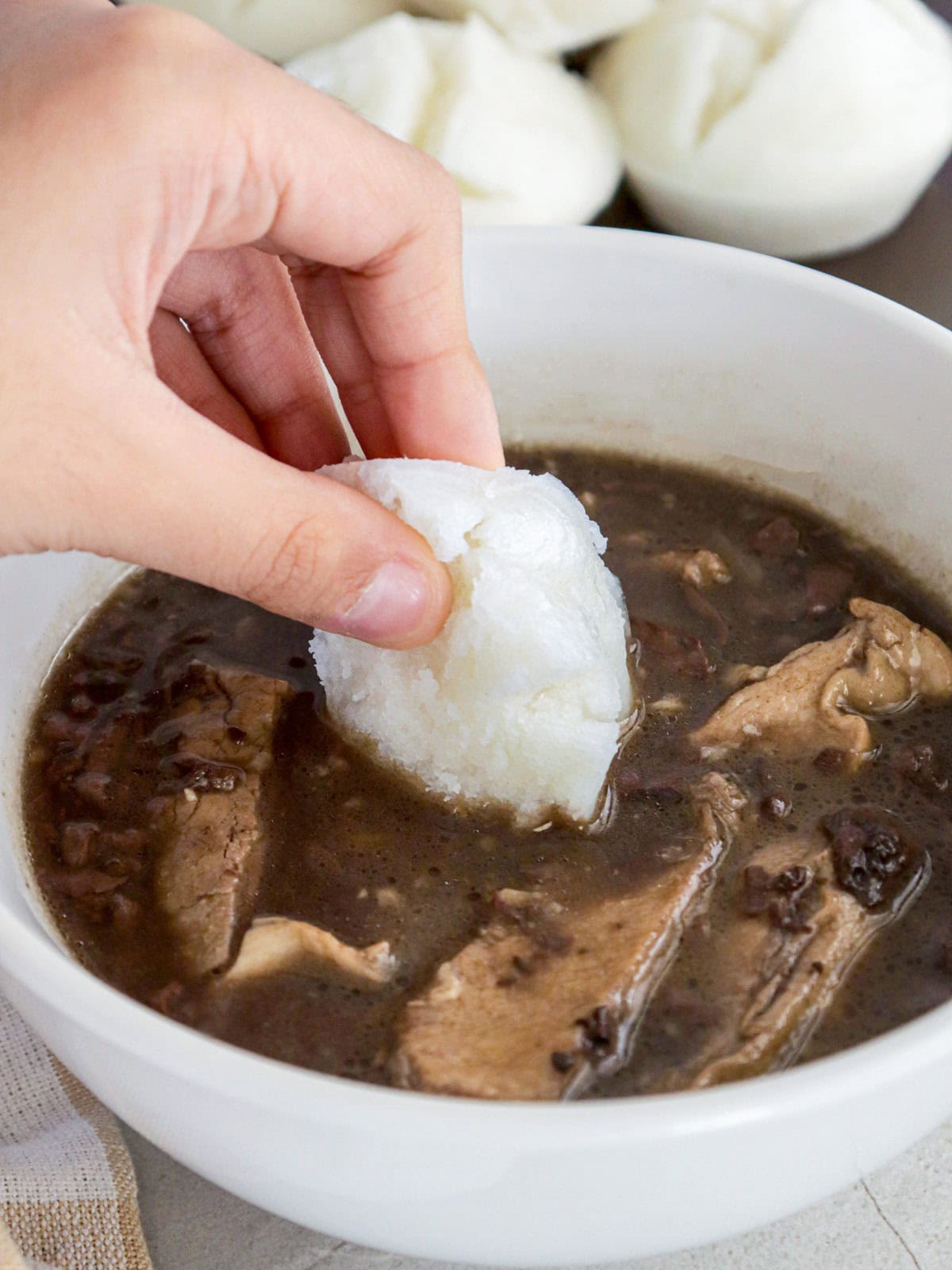
- Serve this Filipino delicacy on its own or as a side to other dishes such as dinuguan, pancit palabok, or chicken sopas.
- Store leftovers in an airtight container; they will keep in the fridge for up to 3 days. When ready to serve, warm in the microwave for a few seconds or in the steamer for about 3 to 5 minutes until softened.
More Snack Recipes
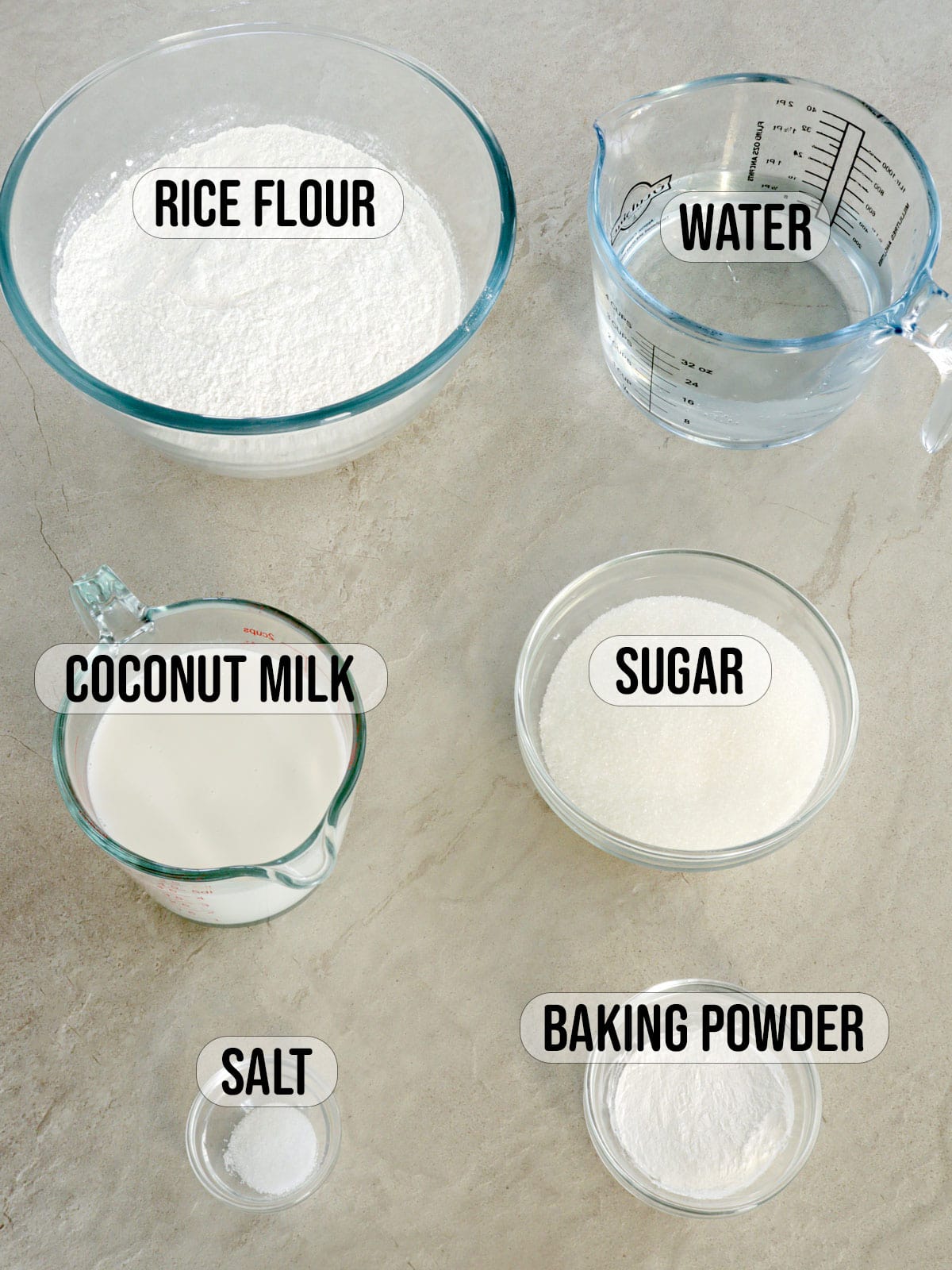
Ingredients
- 4 cups rice flour
- 1 ½ cups sugar
- 2 tablespoons baking powder
- ½ teaspoon salt
- 2 cups water
- 1 can (13.5 ounces) coconut milk
- non-stick cooking spray or melted butter
Equipment
- Steamer
Instructions
- In a bowl, combine rice flour, sugar, baking powder, and salt. Whisk until distributed.
- Add water and coconut milk. Stir until smooth and well-blended. Strain using a fine-mesh sieve.
- Cover with film and refrigerate overnight.
- Pour batter into molds up to ¾ full.
- In the bottom part of the steamer, add water and bring to a boil. Arrange filled puto molds in a single layer on the steamer basket. Place steamer basket over the bottom part. Wrap lid of the steamer with cheesecloth or any cotton material (to prevent condensation from dripping onto puto) and cover steamer.
- Steam for about 15 minutes or until a toothpick inserted in center comes out clean.
- Remove from the heat and allow to cool and gently remove puto from the molds.
Nutrition Information
“This website provides approximate nutrition information for convenience and as a courtesy only. Nutrition data is gathered primarily from the USDA Food Composition Database, whenever available, or otherwise other online calculators.”

Raquel says
Hi Ms. Lalaine,
Thank you for sharing this recipe, I read someone's inquiry about using regular milk instead of coconut milk, actually I tried using fresh milk instead of coconut milk and it did turned out well. I topped it with cheese and everyone in our household loves it.
They're even encouraging me to make a business out of it because it is much different from those puto in the market.
I also tried your kuchinta recipe and it's now our gang's favorite 🙂
Thanks for sharing your cooking skills 🙂
Lalaine Manalo says
Thank you, Raquel! I'm glad you guys like the Kutsinta. Try the Leche Puto next 🙂
JG says
Is the steamer suppose to be on low heat or high heat?
Medith says
Hi Lalaine, made this tonight pro my after taste po I'm just wondering maybe too much baking powder?
I follow all the steps and measurements.
Please help po.
Thanks
Linda says
Can I replace the water with whole milk?
Myrna says
Hi Lalaine,
I seldom really leaves a comment unless the recipe is good. If the recipe is not, I don't comment either. But I normally saves the ones I've tried and found to be good and something that I would be using regularly. Your rice puto is by far the best recipe for puto using rice flour that I have come across with. Especially for us Filipinos living overseas where "giniling na bigas" is not available. This is now my go to recipe for rice puto. I've already made this recipe so many times since I tried this. Thank you so much for sharing 🙂
Lalaine Manalo says
Thank you so much, Myrna. I really appreciate your feedback. I am glad you like the recipe 🙂
Nikki Chavez says
Hi Lalaine! I tried your recipe of puto last weekend and it was yummy. I just want to ask though if you have any tips to make the puto whiter since mine came out yellowish after steaming. Thanks!
Rose says
Hi Laine, may I ask if the rice flour you are referring to in this recipe the same rice flour being used in making palitaw and bilo-bilo. Kindly educate me please.
thanks so much Laine.
Lalaine says
Hi Rose,
No, this is regular rice flour, not the glutinous rice flour used in making palitaw or bilo bilo. The package I think has red lettering while the glutinous one has green. 🙂
Joy Ello says
Iif overnigjht is not possible whats the shortest time till I can steam it
Thank you
Han says
Anung brand name ng baking powder na gamit mo?kasi baking soda ang nakikita ko sa Asian store.ty
Lalaine says
Hello Han,
The one I used for this Calumet brand and I bought it from Walmart I believe.
Gilda says
Just made this recipe today and it was aweeeesome! Didn’t have the round molds so i use the extremely small loaf pan and steamed for 20 minutes and it came out delicious! Thanks, Lalaine!
Lalaine says
Thank you so much, Gilda. I am glad you enjoyed the puto. 🙂
Moon says
May I please ask why my cake wont raise to the top? I steamed it and the top part is mushy and wet. The bottom is hard. Please teach me on what I did wrong ?
Evelyn says
Hi Lalaine,
I made your putong bigas by strictly following the recipe. I guess, I followed the one that didn't say the batter needs refrigeration. I followed the one that says "let is sit for 4 hours for the baking powder to act". When I steames my batter after 4 hours, the result is not what I expected (soft and fluppy). Mine, turned out to be hard and no breaking of the cooked batter.
Where did I go wrong? Please enlighten me. Thanks.
ALISA says
Your other recipe for Puto, it calls for refrigerating the dough mixture of rice flour, water and coconut mik and then refrigerate overnight. The next day, you told us to mix in the sugar and the baking powder. The result is not really fluffy. I did put a cloth over the steamer before covering it to avoid water condensation to the mixture/
Lalaine says
Hello Alisa,
I am sorry about the confusion, this is an old recipe that I updated yesterday. I tested the old recipe a few times to see how I could improve it. The measurements are the same but from trying different batches, I found that it's ok to add the baking powder and sugar before refrigerating. I mentioned in the tips section that you can steam the batter right away, it's just the refrigeration part makes the cake better in my opinion. Did the puto turn out hard when you made them? They're a bit more compact than, say, a mamon, but they do have a nice, soft texture.
Han says
Ng try ako mgluto ng puto kaso hindi maganda resulta kasi mapait kasi parang subra yata ang equation ng baking soda
Lalaine says
Hello Han,
Walang baking soda ang recipe. It's supposed to be baking powder 🙁
charnette ng says
Hi, I had bought the wrong ingredient, I bought coconut cream instead of coconut milk. can I use it for the puto? what should I do?
hope you can help me...
Lalaine says
You can still use it. As coconut cream is more concentrated just adjust the amount needed and add more water. 🙂
Kat says
Hi po! I am out of rice flour so I instead soak rice with water for the whole night then just put in the food processor tomorrow.. Now I'm concern with the measurements, is 4 cups rice flour (dry) is equal to 4 cups grounded wet rice flour mixture? Or should I go less? Thank you
Carlos says
Hi I forgot to read the l
Part that said chill overnight and I already added everything in it. Can I still make it or do chill it still?
Lalaine says
No problem! I retested the recipe to try out different ways and refrigerating the complete batter is fine 🙂
Angelica Canelas says
I just tried it today and it was great 💕
Lalaine says
🙂
Irviannd says
Hi! Love this recipe, have made it before. I’m in a rush though to make the current recipe and was wondering if I really needed to leave the batter overnight or can it be a couple hours?
Lalaine says
You can steam the batter straight away. I just recommend refrigerating it as this extra step seems to help with the texture of the puto and makes it less crumbly.
Maimai Sun says
Hi! I'm planning to make this but i want to add salted egg and cheese. Will I add it before steaming or steam a few minutes b4 adding the egg and cheese? Tnx!