
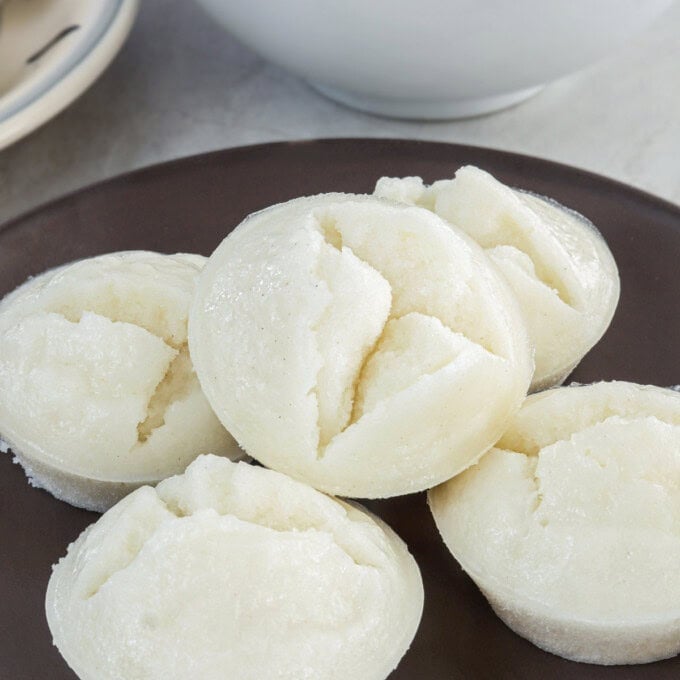
Puto Bigas, made with rice flour and coconut milk, are soft, fluffy, and tasty! These Filipino steamed rice cakes are delicious on their own or paired with savory dishes such as pancit and dinuguan.
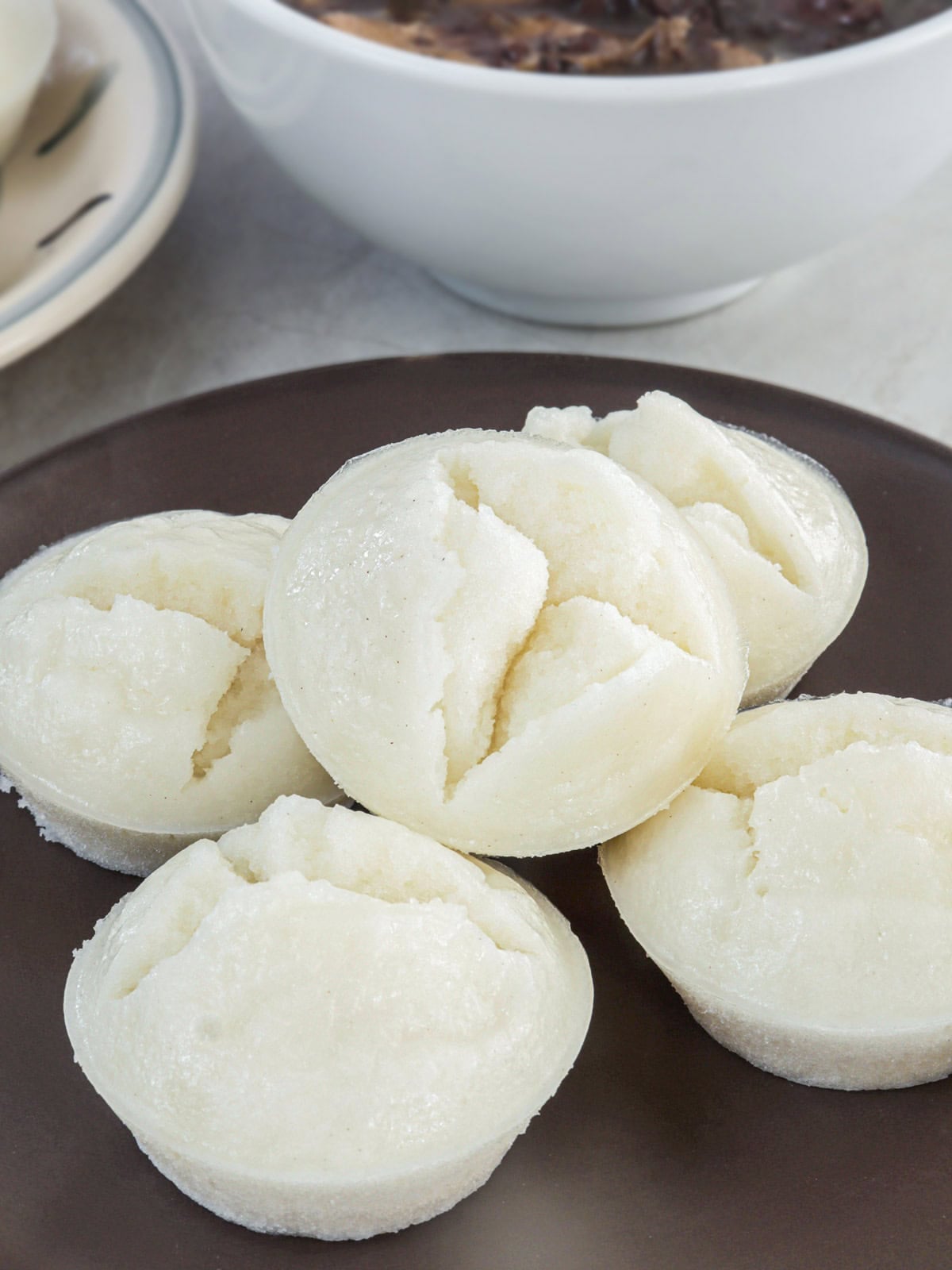
I have recipes for morcon and kilawing labanos atay ready to publish in my draft box, but since I posted my dinuguan a couple of days ago, I thought the best follow-up would be its perennial pair: puto. Because what's better to serve with hearty and savory pork blood stew than soft and fluffy steamed rice cakes?
What is Puto
Puto is a popular Filipino steamed rice cake usually enjoyed as a filling midday snack or as an accompaniment to savory dishes.
Although all-purpose flour, cake flour, or even hotcake mixes are used for puto cake or cheese puto, traditional putong puti is made by soaking rice grains in water overnight and then processing them into a smooth batter called galapong. The fermented rice batter is then steamed in banana-lined bamboo platters (bilao) or individual molds.
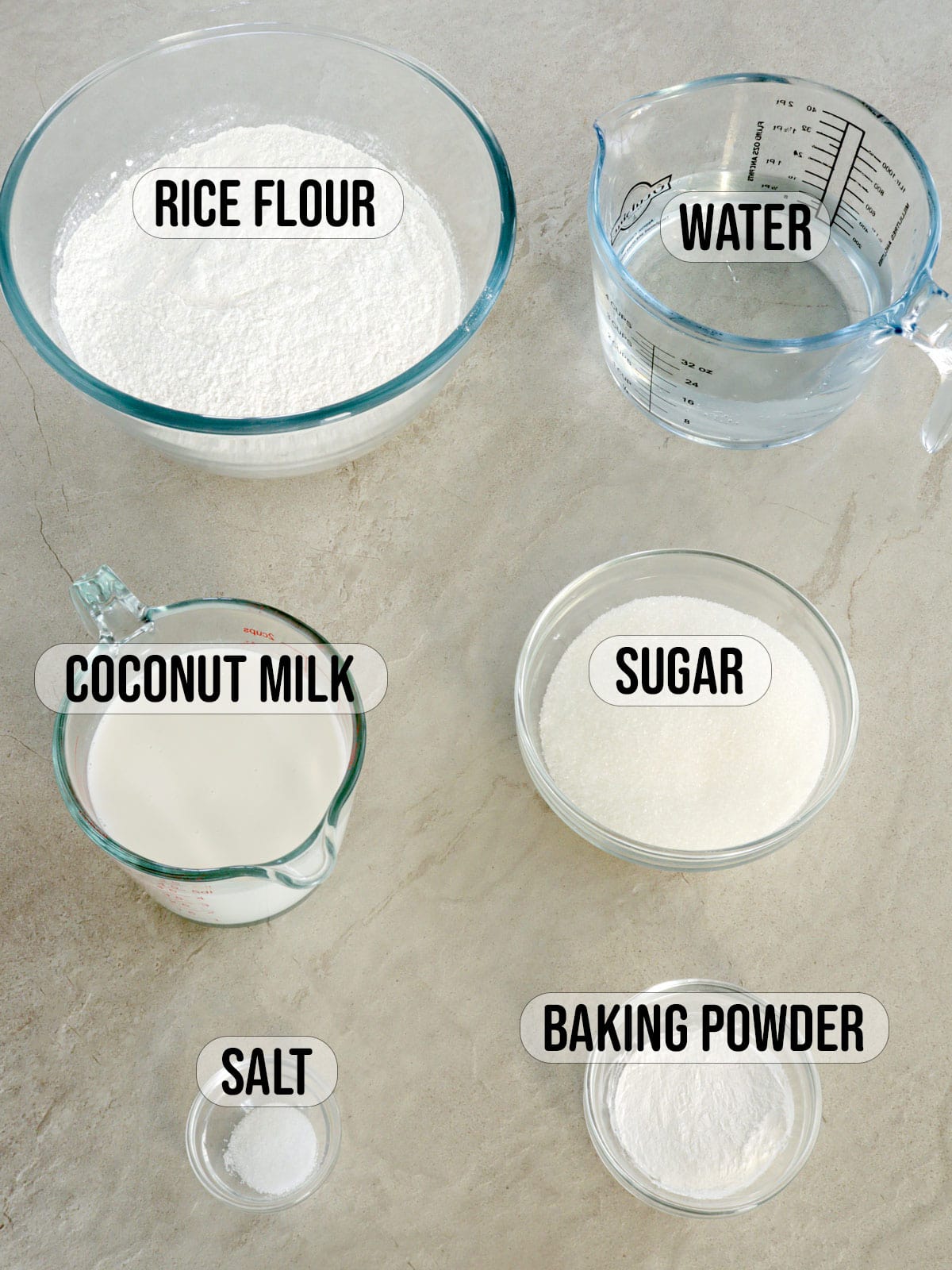
Leavening agents, such as baking powder or yeast, are used to give the batter a rise. Coconut milk provides moisture, while sugar adds sweetness, and a sprinkling of salt balances the flavors.
Over the years, home cooks have spun these native cakes into a wide variety of delicious dishes by adding pandan or ube extracts or by topping them with slices of cheese or salted duck eggs.
How to Make Puto with Rice Flour
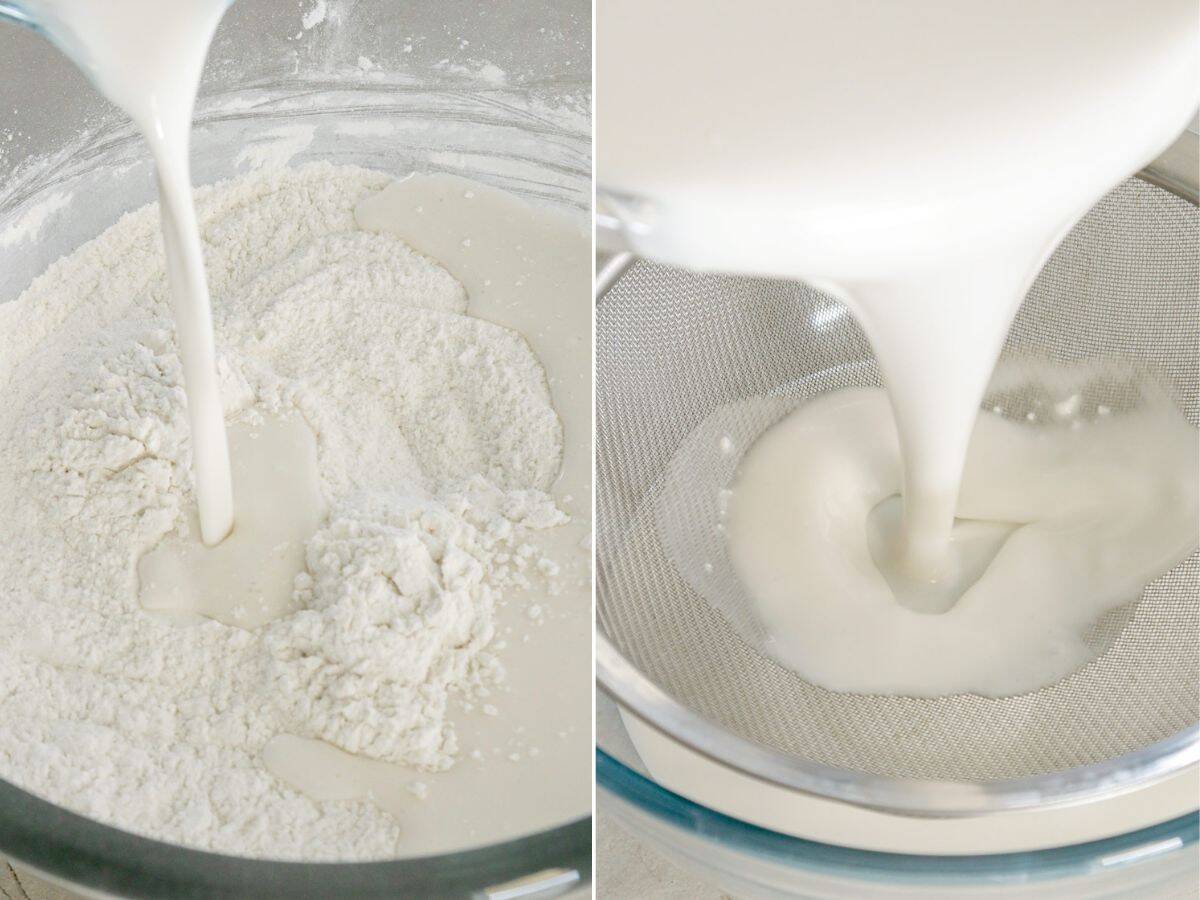
- Combine the ingredients in a bowl and stir until smooth and blended. Strain the mixture using a fine-mesh sieve to remove lumps.
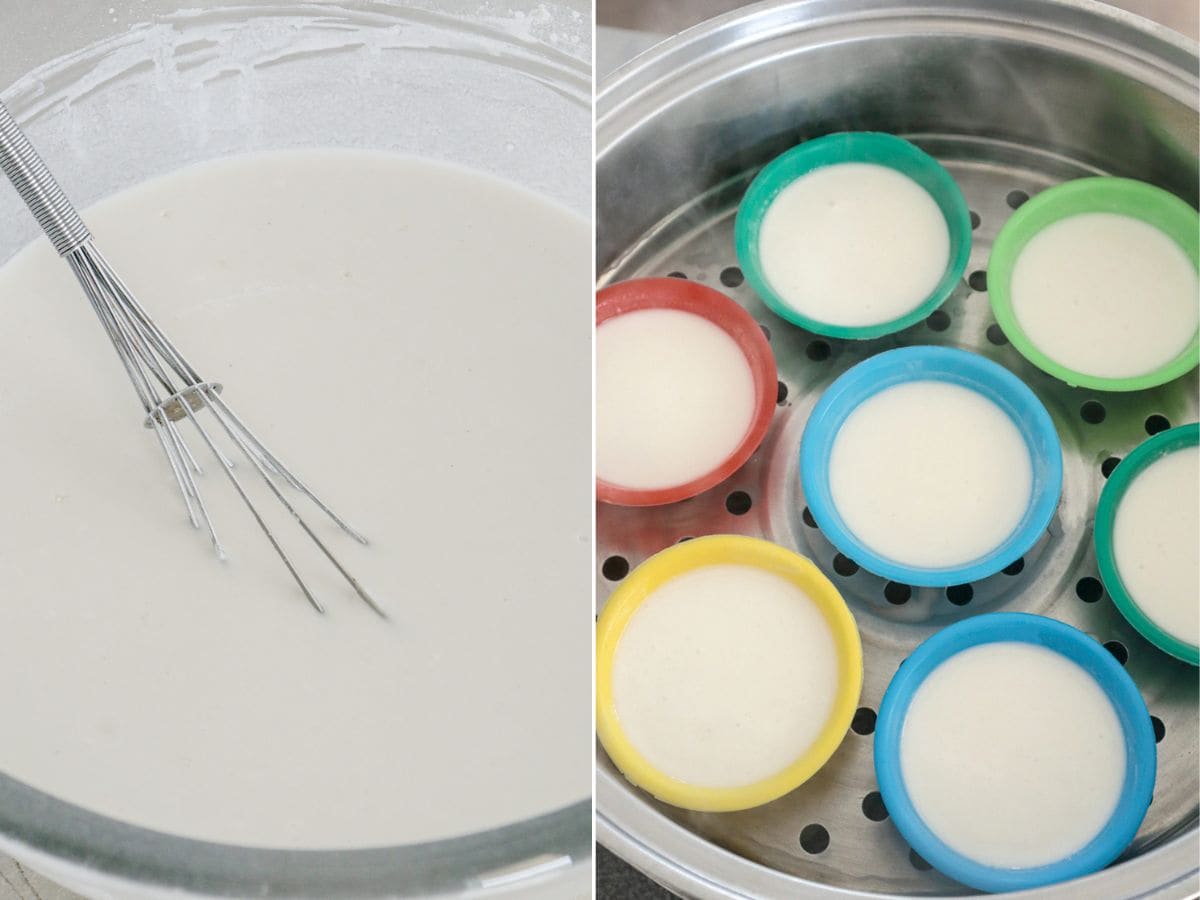
- While you can steam the rice batter as soon as you make it, I highly recommend refrigerating it first overnight before steaming. It makes for a softer, fluffier, and less crumbly texture.
- I find it unnecessary to grease the molds. Just allow the puto to cool enough before removing it from the molds to prevent it from falling apart.
- Cover the steamer lid with cheesecloth or another cotton material to prevent condensation from dripping onto the steamed muffins.
- Adjust the steam time based on the size of the molds or ramekins used. Check for doneness by inserting a toothpick in the center of the cake; if it comes out clean, the steamed cake is done.
Helpful Tip
To create the cracks on top, make sure the water is rapidly boiling before placing the puto in the steamer and steam on high heat.
Frequently Asked Questions
Is Filipino puto gluten-free?
It depends on the recipe. Some puto varieties are made with wheat flour, but this particular recipe for putong puti, or bigas, uses rice flour only and is gluten-free.
Serving suggestions and storage instructions
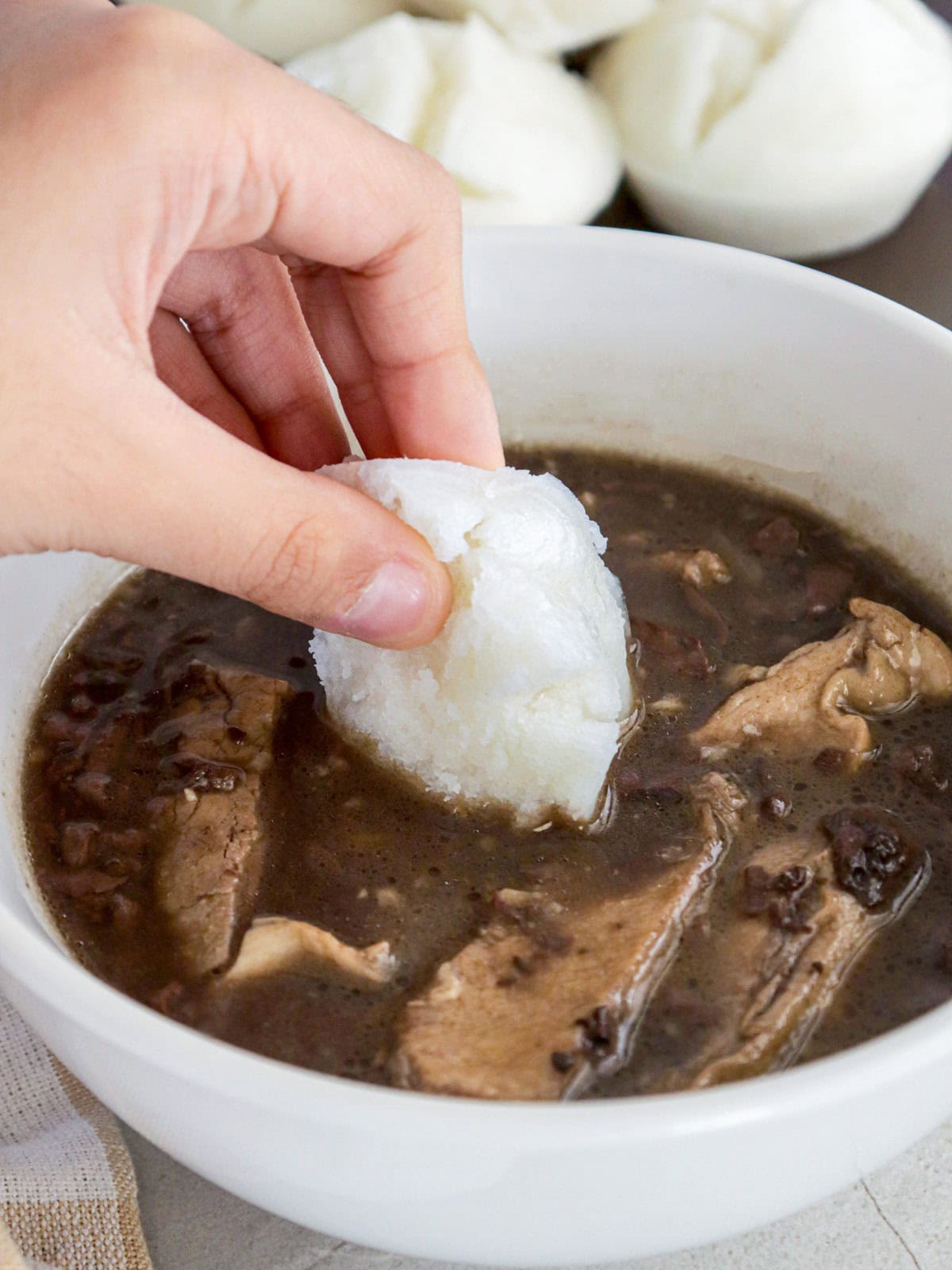
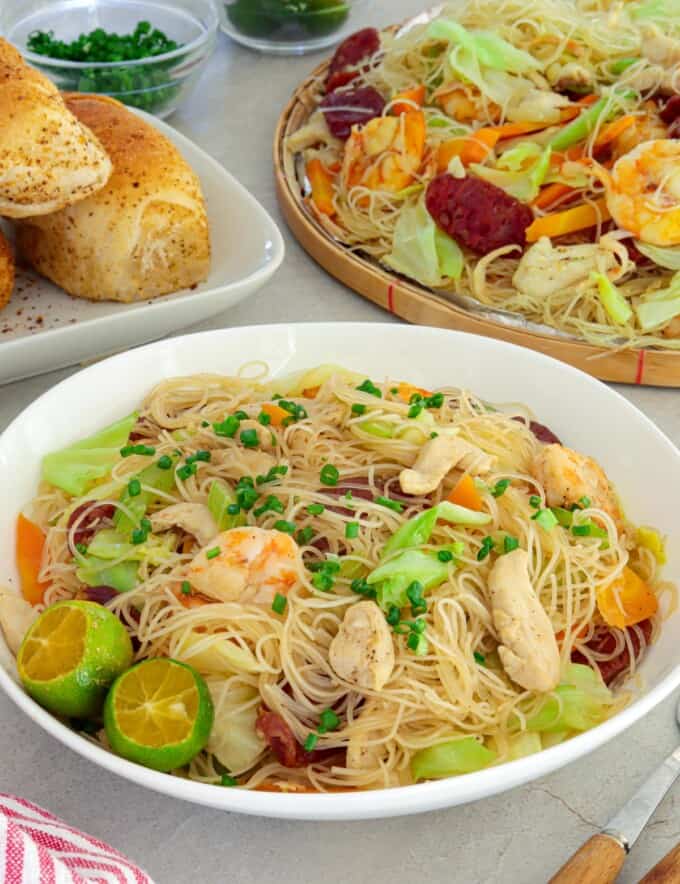
- Serve this Filipino delicacy on its own or as a side to other dishes such as dinuguan, pancit palabok, or chicken sopas.
- Store leftovers in an airtight container; they will keep in the fridge for up to 3 days. When ready to serve, warm in the microwave for a few seconds or in the steamer for about 3 to 5 minutes until softened.
More Snack Recipes
Ingredients
- 4 cups rice flour
- 1 ½ cups sugar
- 2 tablespoons baking powder
- ½ teaspoon salt
- 2 cups water
- 1 can (13.5 ounces) coconut milk
- non-stick cooking spray or melted butter
Equipment
- Steamer
Instructions
- In a bowl, combine rice flour, sugar, baking powder, and salt. Whisk until distributed.
- Add water and coconut milk. Stir until smooth and well-blended. Strain using a fine-mesh sieve.
- Cover with film and refrigerate overnight.
- Pour batter into molds up to ¾ full.
- In the bottom part of the steamer, add water and bring to a boil. Arrange filled puto molds in a single layer on the steamer basket. Place steamer basket over the bottom part. Wrap lid of the steamer with cheesecloth or any cotton material (to prevent condensation from dripping onto puto) and cover steamer.
- Steam for about 15 minutes or until a toothpick inserted in center comes out clean.
- Remove from the heat and allow to cool and gently remove puto from the molds.
Nutrition Information
“This website provides approximate nutrition information for convenience and as a courtesy only. Nutrition data is gathered primarily from the USDA Food Composition Database, whenever available, or otherwise other online calculators.”
Joseph L. Buaron says
hi Lalaine, many thank for your complete very open instruction,
Lalaine says
Thank you so much, Joseph. Happy cooking!
donna says
hello!!! ive treid ths recipe and it taste good but every set took me 20 min or more because u said if the stick comes out clean then its done. Mine took a while before it came out clean. what went wrong po? and wala po crack sa top yong akin pero masarap pa din. salamat
elena says
i tried this recipe,kya lng po ung texture ng puto is nghihiwahiwalay at nd po mganda ung amoy,ung rice flour kya na gnamit q?
Lorna Sudaria says
I've been looking for a good puto recipe for a while but failed most of the time. Until I came across your recipe recently. I just tried it and came out soft and fluffy. Some came out with cracked in the middle but not all of it. I find it a little too sweet though so I'll just lessen the sugar next time. Thank you for sharing the recipe.
noemi Guerra says
Hi so ive decided to give this a try anf whrn i poured my water and coconut milk into the flour it kinda just turned into a obleck type consistency. Is this normal?
Mylene says
Can I use glutinous rice flour instead of rice flour? if so, how many cups?
Lalaine says
Hi Mylene,
Glutinous rice flour won't work in this recipe because that is a sticky rice, the texture will be very different. Please don't use it.
Mylene says
Thanks! I just made the Royal Bibingka out of the glutinous rice flour, your recipe as well. It reminds me of tikoy 🙂
Lalaine says
Ah yes, they do have the same texture Love tikoy! I need to learn how to make it!
L. Weith says
Hi Ms. Lalaine!
Want to try your puto recipe. Puto is one of my husband's favorite Filipino food. But i have problems with the ingredients here in Germany. We only have in here is flour. And the baking powder is different from what we use in the Philippines. Can I make puto using flour? And can it also be without baking powder?
Lynn says
Hi Miss Lalaine.
If I will be using fresh coconut, should I use the kakang gata or the pangalawang piga? And how many cups for this recipe?.
I am very excited to try your recipe. I love puto 😊
Lalaine says
Coconut milk will be the second extraction. You need 414 ml of coconut milk 🙂
Lynn says
Thank you 🙂 ❤️
Lalaine says
🙂
Ian says
Hi Lalaine,
the puto came out as i wanted it - soft, white, tasty. But, the bottom part looked like "pores" and not so smooth. Any recommedation on how to avoid it?
Aries says
Hi what if i don't have a puto molder what is the replacement?
Lalaine says
You can try mini muffin pans but you might have to grease the muffin pan well so they won't stick. Let me know how it works. 🙂
ice says
yong 3 tablespoon po b n baking powder ilang grams sya? at ung cups n.ginamit nyo.po ilang grams.din katumbas?
thanks
Lalaine says
Hello Ice
1 cup is standard measurement and it's equivalent to 125 grams. 🙂
Mike says
Actually 1 cup is 250 Grams! cheers Mike
Lalaine says
I actually used the conversion from King Arthur's Flour and it does state A cup of all-purpose flour weighs 4 1/4 ounces or 120 grams. Here are the links to sources: http://www.kingarthurflour.com/learn/ingredient-weight-chart.html http://dish.allrecipes.com/cup-to-gram-conversions/ https://www.weekendbakery.com/cooking-conversions/ http://m.joyofbaking.com/WeightvsVolumeMeasurement.html
Ingredients might have the same bulk but don't necessarily weigh the same like 1 cup of sugar might weigh more in grams than 1 cup flour. Cheers!
Mike says
But surely it is volume measurement not weight measurement? Volume is 250g Mike
Lalaine says
Volume measurements woukd be 1 cup, 1 tablespoon, etc. Weight measurements would be in grams. That is why things with the same volume like 1 cup of rice would weigh differently in grams than something lighter like 1 cup of flour.
Apol says
Hello. Ginawa ko po half of the measurements ng recipe nyo since 3 lang kaming kakain. So i used 2 cups rice flour, 1 cup water and 1/2 cup coco milk...it ended like a DOUGH not a batter..mali ba na hatiin ko ang measurements? Thanks.
llanz says
Hi Ate,
First, thank you so much for the recipe. I did this 3 times na siguro. hehe..
Last night, I tried to make this again. I did 3 batches. the first batch seemed fine; pero parang nangitim siya.
the 2nd and 3rd batch, totally, nag-darken ang kulay nya. the taste is still the same and edible.
Dahil wala akong puto moulds, ginagamitan ko nalang ng regular cake trays, so cooking time is extended to around 15-20 mins.
Nangyari na po ba ito sau? Anu po kaya ang dahilan?
thanks!
Jing says
Hi Tita, I followed everything, but I ended up with a "kutsinta". What did I do wrong?
Rissa says
Mine ended the same way too!just made this recipe tonight but they ended up shiny not fluffy like the usual puto 😢
Alessandra Mariel Diric says
So I accidentally read passed the refrigerate part and I already mixed the salt sugar and all that stuff! What do I do?!???😭😭
Lalaine Manalo says
It should work fine. I just like when the dough is refrigerated as the puto seems softer and less crumbly.
agnes says
Hi! Thank you so much for this recipe. Is there a specific brand of rice flour you use? Can you use rice flour made in Thailand or other countries?
Thank you,
agnes
Lalaine says
I use the one in bags. They're clear bags with red lettering. The one with green letters is glutinous rice flour.
Matt says
Cain I use instant gata for the coconut milk?
Lalaine says
What do you mean instant gata? Are those the one in cans or in powder form?