
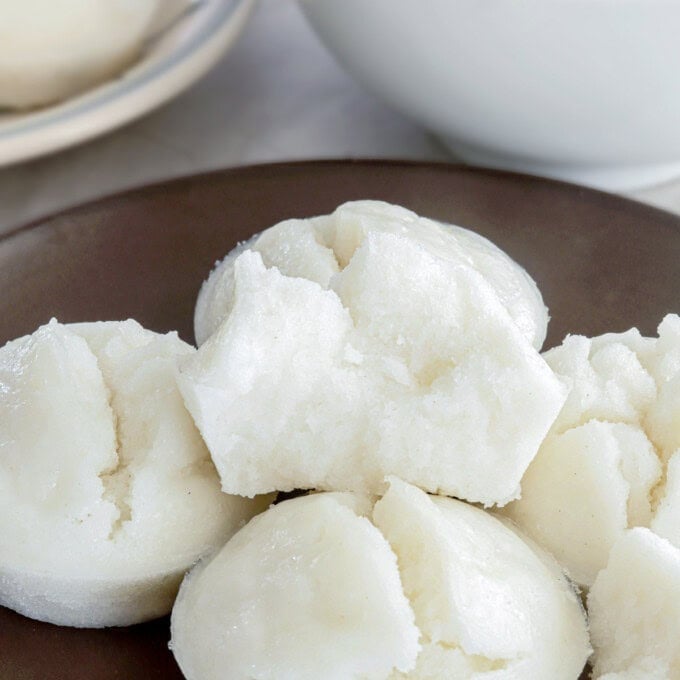
Puto Bigas, made with rice flour and coconut milk, are soft, fluffy, and tasty! These Filipino steamed rice cakes are delicious on their own or paired with savory dishes such as pancit and dinuguan.
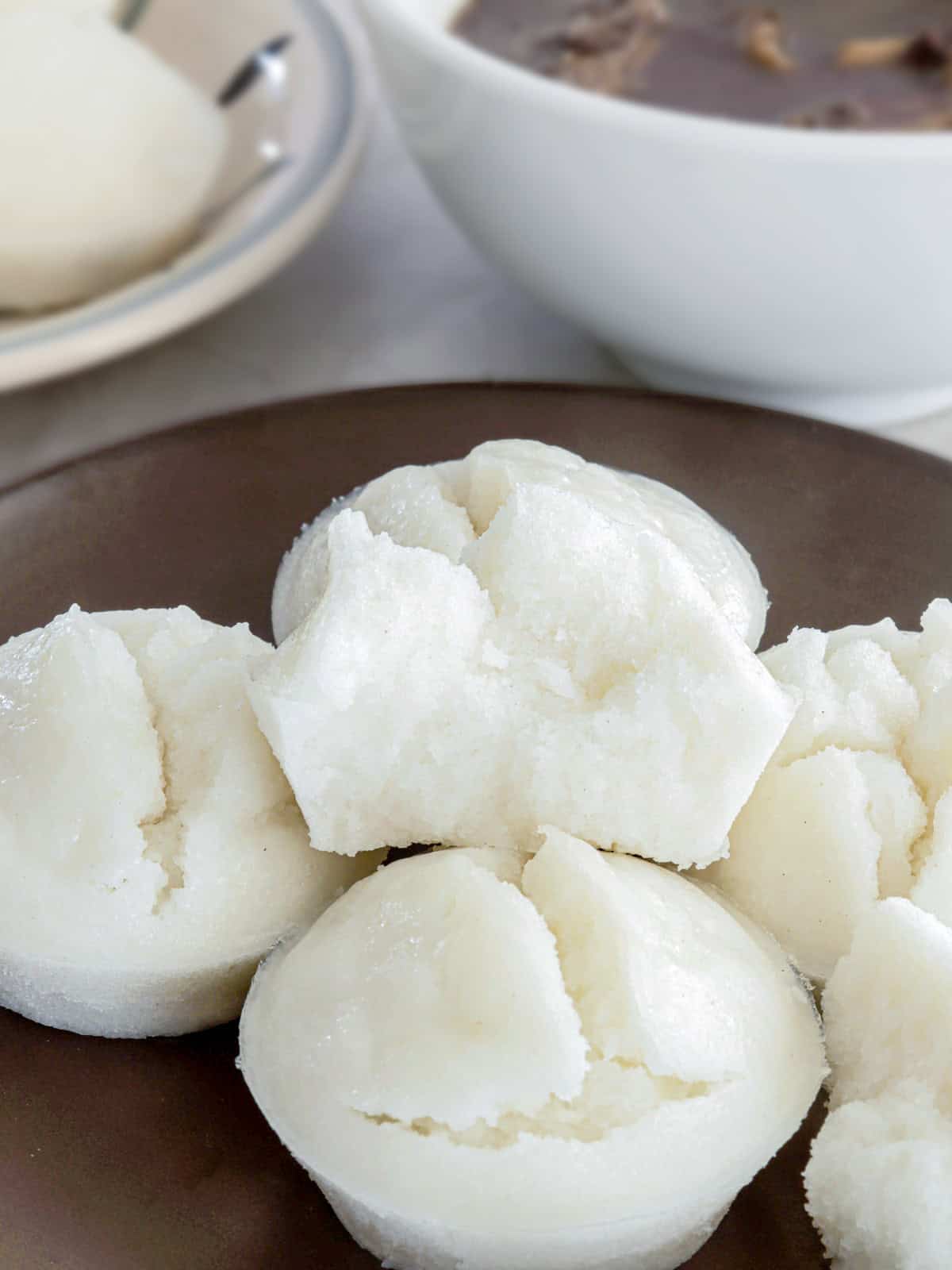
I have recipes for morcon and kilawing labanos atay ready to publish in my draft box, but since I posted my dinuguan a couple of days ago, I thought the best follow-up would be its perennial pair: puto. Because what's better to serve with hearty and savory pork blood stew than soft and fluffy steamed rice cakes?
What is Puto
Puto is a popular Filipino steamed rice cake usually enjoyed as a filling midday snack or as an accompaniment to savory dishes.
Although all-purpose flour, cake flour, or even hotcake mixes are used for puto cake or cheese puto, traditional putong puti is made by soaking rice grains in water overnight and then processing them into a smooth batter called galapong. The fermented rice batter is then steamed in banana-lined bamboo platters (bilao) or individual molds.
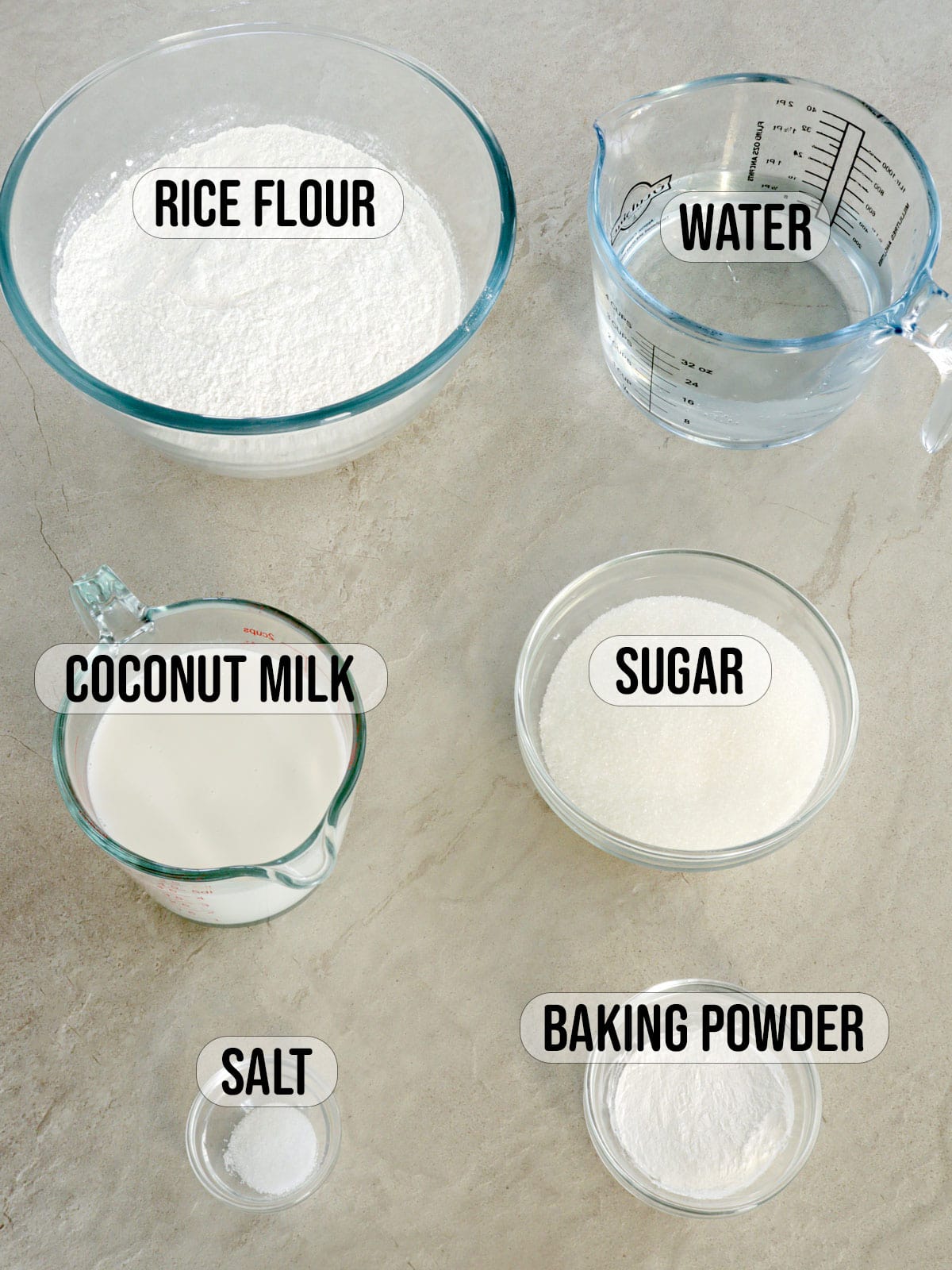
Leavening agents, such as baking powder or yeast, are used to give the batter a rise. Coconut milk provides moisture, while sugar adds sweetness, and a sprinkling of salt balances the flavors.
Over the years, home cooks have spun these native cakes into a wide variety of delicious dishes by adding pandan or ube extracts or by topping them with slices of cheese or salted duck eggs.
How to Make Puto with Rice Flour
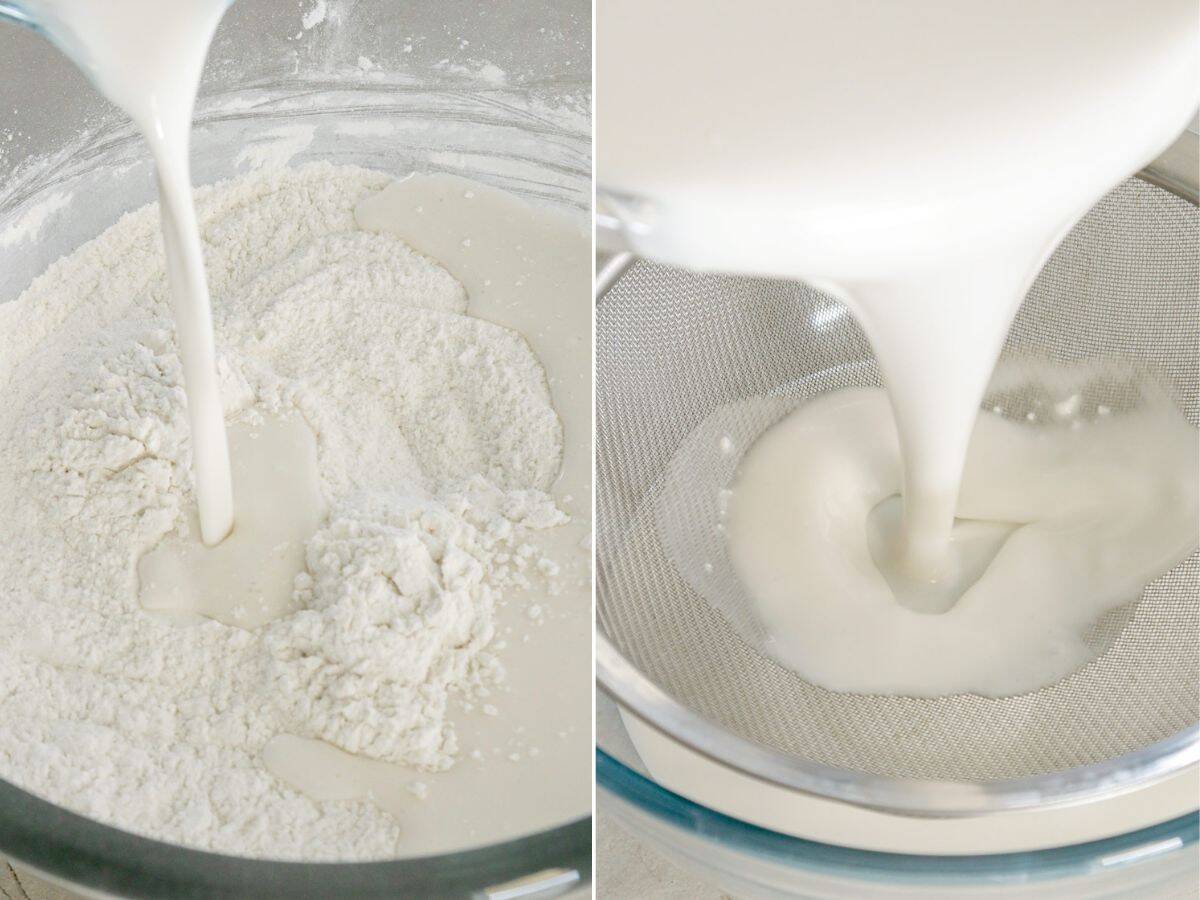
- Combine the ingredients in a bowl and stir until smooth and blended. Strain the mixture using a fine-mesh sieve to remove lumps.
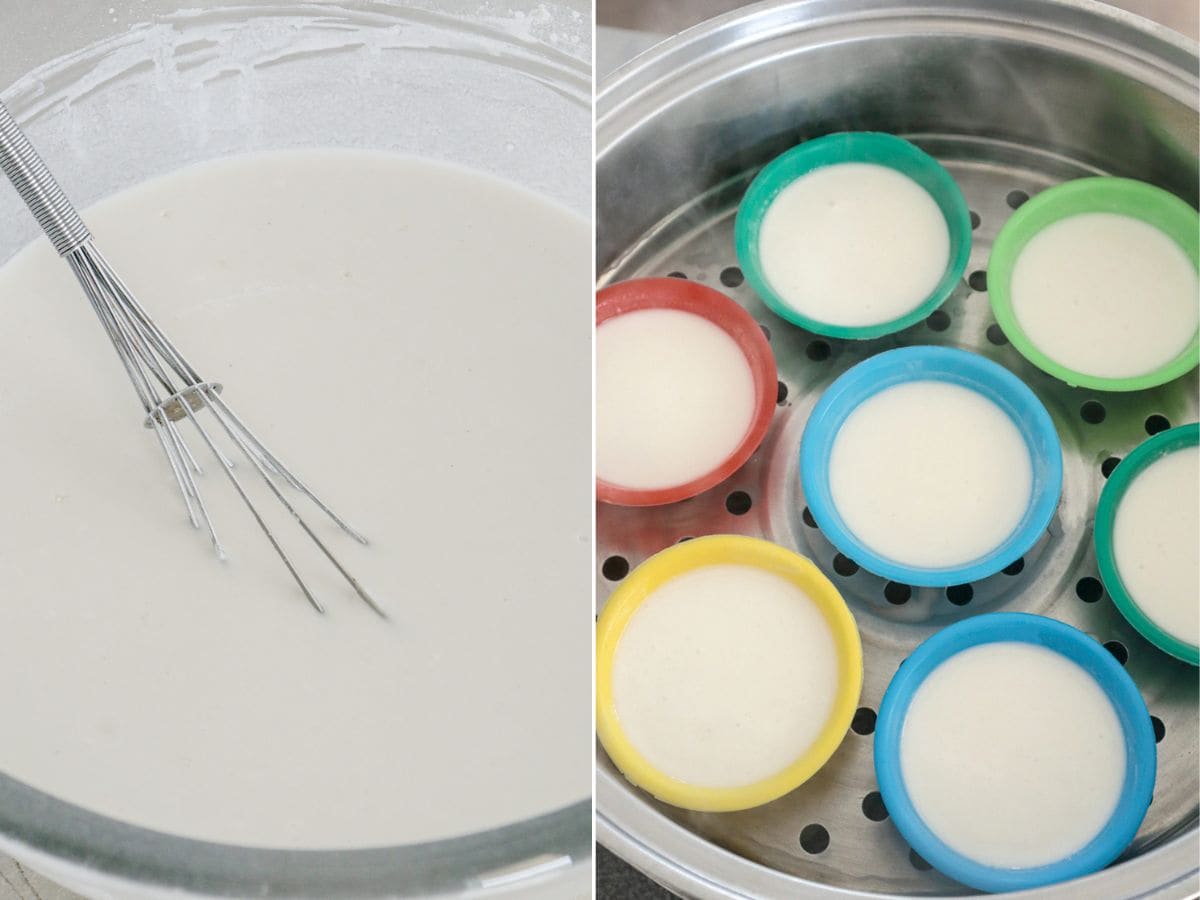
- While you can steam the rice batter as soon as you make it, I highly recommend refrigerating it first overnight before steaming. It makes for a softer, fluffier, and less crumbly texture.
- I find it unnecessary to grease the molds. Just allow the puto to cool enough before removing it from the molds to prevent it from falling apart.
- Cover the steamer lid with cheesecloth or another cotton material to prevent condensation from dripping onto the steamed muffins.
- Adjust the steam time based on the size of the molds or ramekins used. Check for doneness by inserting a toothpick in the center of the cake; if it comes out clean, the steamed cake is done.
Helpful Tip
To create the cracks on top, make sure the water is rapidly boiling before placing the puto in the steamer and steam on high heat.
Frequently Asked Questions
Is Filipino puto gluten-free?
It depends on the recipe. Some puto varieties are made with wheat flour, but this particular recipe for putong puti, or bigas, uses rice flour only and is gluten-free.
Serving suggestions and storage instructions
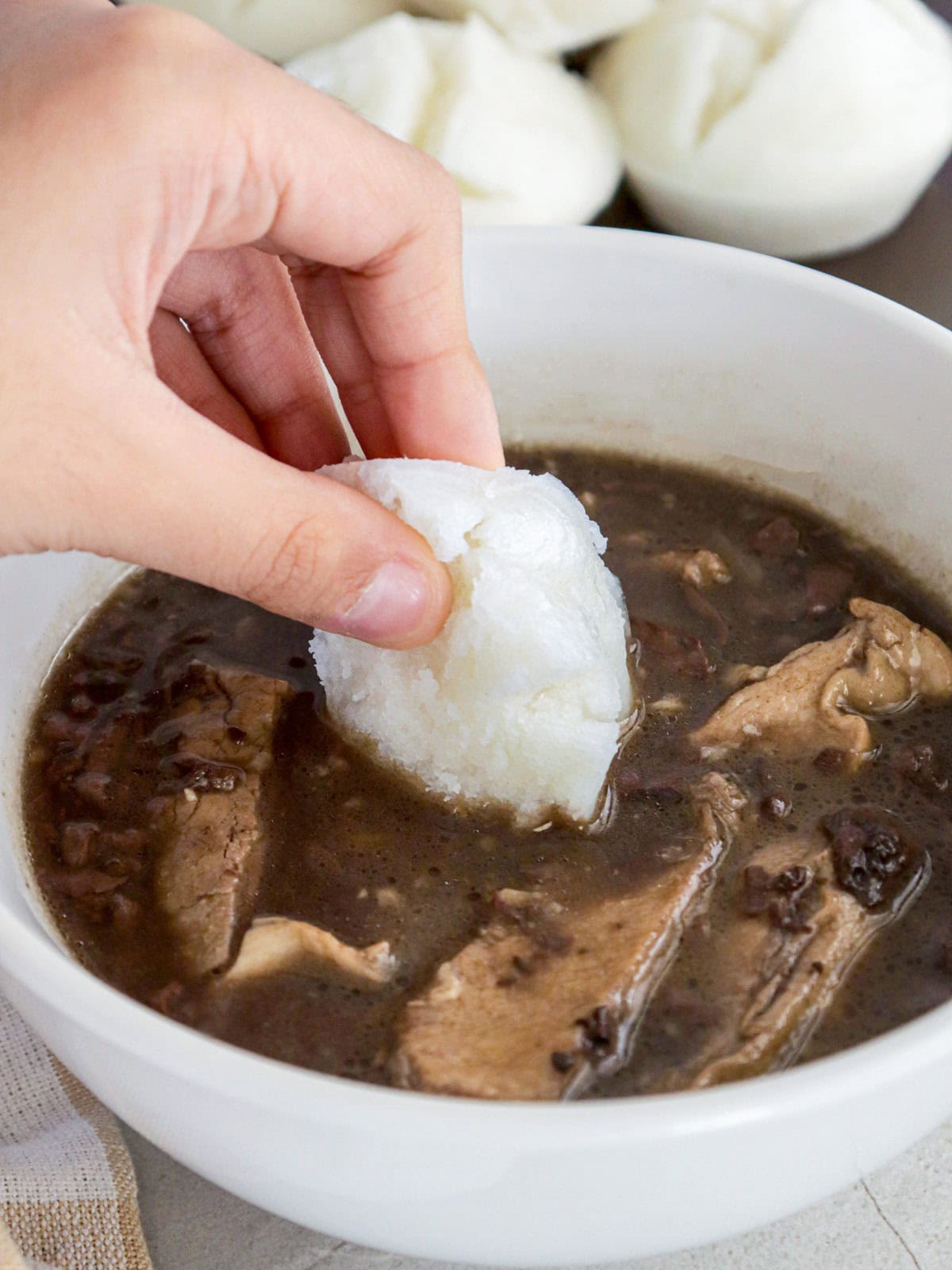
- Serve this Filipino delicacy on its own or as a side to other dishes such as dinuguan, pancit palabok, or chicken sopas.
- Store leftovers in an airtight container; they will keep in the fridge for up to 3 days. When ready to serve, warm in the microwave for a few seconds or in the steamer for about 3 to 5 minutes until softened.
More Snack Recipes
Ingredients
- 4 cups rice flour
- 1 ½ cups sugar
- 2 tablespoons baking powder
- ½ teaspoon salt
- 2 cups water
- 1 can (13.5 ounces) coconut milk
- non-stick cooking spray or melted butter
Equipment
- Steamer
Instructions
- In a bowl, combine rice flour, sugar, baking powder, and salt. Whisk until distributed.
- Add water and coconut milk. Stir until smooth and well-blended. Strain using a fine-mesh sieve.
- Cover with film and refrigerate overnight.
- Pour batter into molds up to ¾ full.
- In the bottom part of the steamer, add water and bring to a boil. Arrange filled puto molds in a single layer on the steamer basket. Place steamer basket over the bottom part. Wrap lid of the steamer with cheesecloth or any cotton material (to prevent condensation from dripping onto puto) and cover steamer.
- Steam for about 15 minutes or until a toothpick inserted in center comes out clean.
- Remove from the heat and allow to cool and gently remove puto from the molds.
Nutrition Information
“This website provides approximate nutrition information for convenience and as a courtesy only. Nutrition data is gathered primarily from the USDA Food Composition Database, whenever available, or otherwise other online calculators.”

Juelz V says
Is it necessary to refrigerate the mix for 24 hrs or can i cook it directly after mixing?
Lalaine Manalo says
You can steam the batter straight away but the puto will be flufflier and less crumbly if you let it stand in the refrigerator for at least a few hours.
rene dorosan tagum says
VERY GOOD
Julian says
This got me fucked up. Didn’t work at all. Thanks for ruining my friend’s birthday!
Lalaine Manalo says
I apologize if the recipe was unsuccessful for you, I understand the frustration of wasting time and ingredients. But this recipe does work and has been tested by me and tried by quite a few of our readers. May I know what went wrong?
Bernardito Puntero says
Satisfactory.
Santiago H. says
Hi! Want to try the puto recipe but when I opened the metric measurement I got confused. 4 cups rice flour is 640 g but 2 cups water is 473 ml. What is the volume of your measuring cup 200 ml or 250 ml? Thank you.
Lalaine Manalo says
8 fluid ounces in US measurements is 236.6 ml, rounded off to 240 ml for culinary purposes.
MARILYN SANTOS GABRIEL says
Love its whiteness, looks deliciously fluffy
deli says
Would it affect the outcome if I reduced the sugar to anything but 1 1/2 cups? (say to 1/2 cup)
Lalaine Manalo says
I've never tried it, but I don't think reducing the sugar would affect texture, just taste of course.
benny a. castro says
I followed this recipe to a T and it turned out perfect! Fluffy and delicious! I just have one question, would adding a little coconut vinegar have an adverse effect on the recipe? I've tried puto with coconut vinegar and I kinda like the little kick on the tastes! Thank You.
Lalaine Manalo says
I've never tried adding vinegar to the puto and I'm not sure what effect it would have to the batter. I do add a little vinegar to my empanada dough to make the crust more tender. Actually, some puto have a slight tang from the fermentation process. Traditional puto in the olden days walang leavening agents; yung fermentation ang nagpapaalsa and it also adds konting asim
MARILYN SANTOS GABRIEL says
Hindi pako nakapag luto ng puto.. Etong recipe nato gagayahin ko
MARILYN SANTOS GABRIEL says
Parang goldilocks, so floppy..
echel Cumba says
i’ve been trying so many puto recipes, and your recipe is the only one that did not fail me!! love it!!
Lalaine Manalo says
Thank you so much for the 5-stars! I am glad the recipe worked well!
MARILYN SANTOS GABRIEL says
One of the item i usually take home from goldilocks, now i know how to do it..
MARILYN SANTOS GABRIEL says
Madali lng pala gawin. ❤️💕♥️💓