
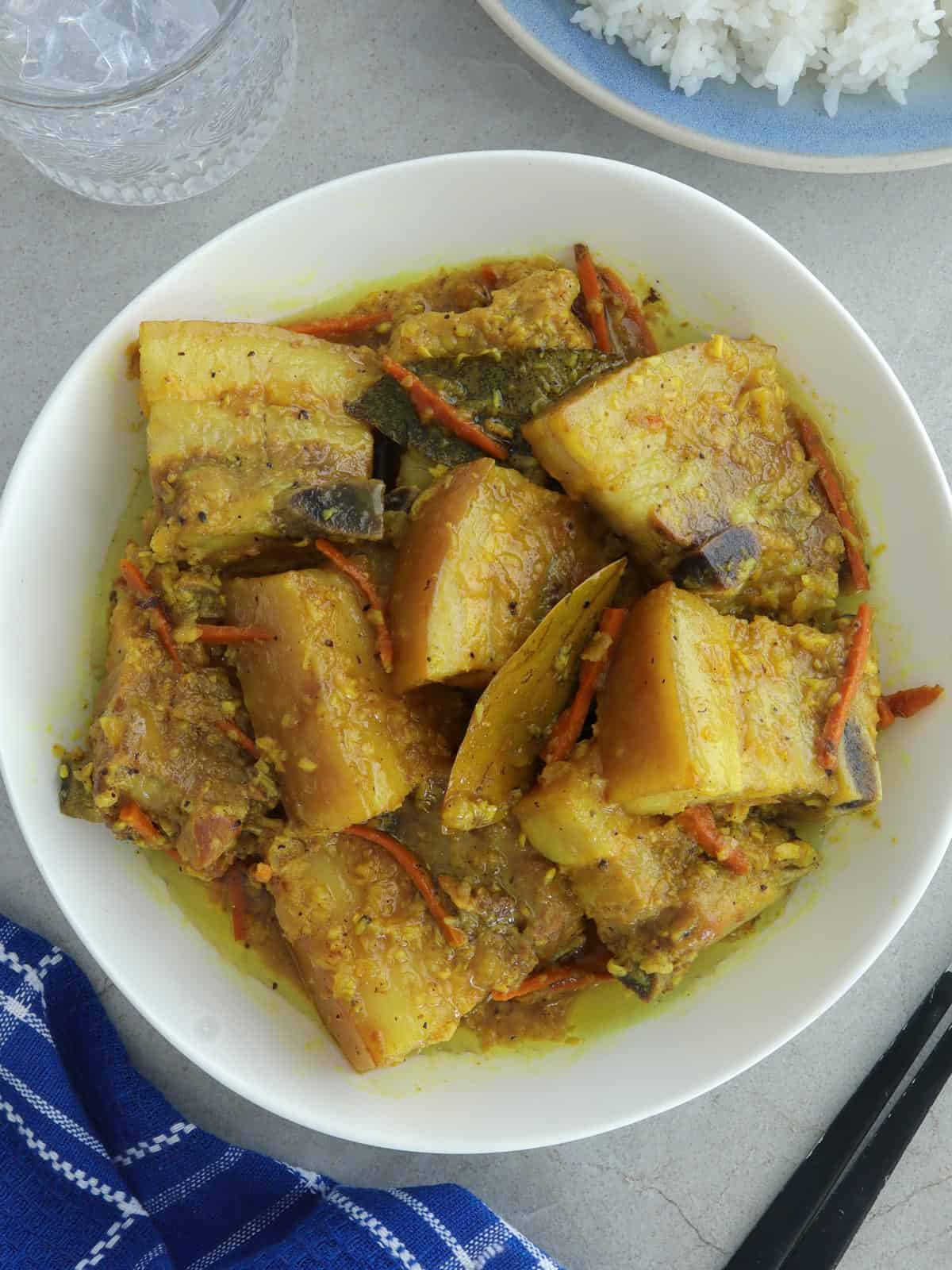
Adobong Puti is made of pork belly stewed in vinegar, salt, and spices. This white adobo is hearty, full of flavor, and pairs well with steamed rice.
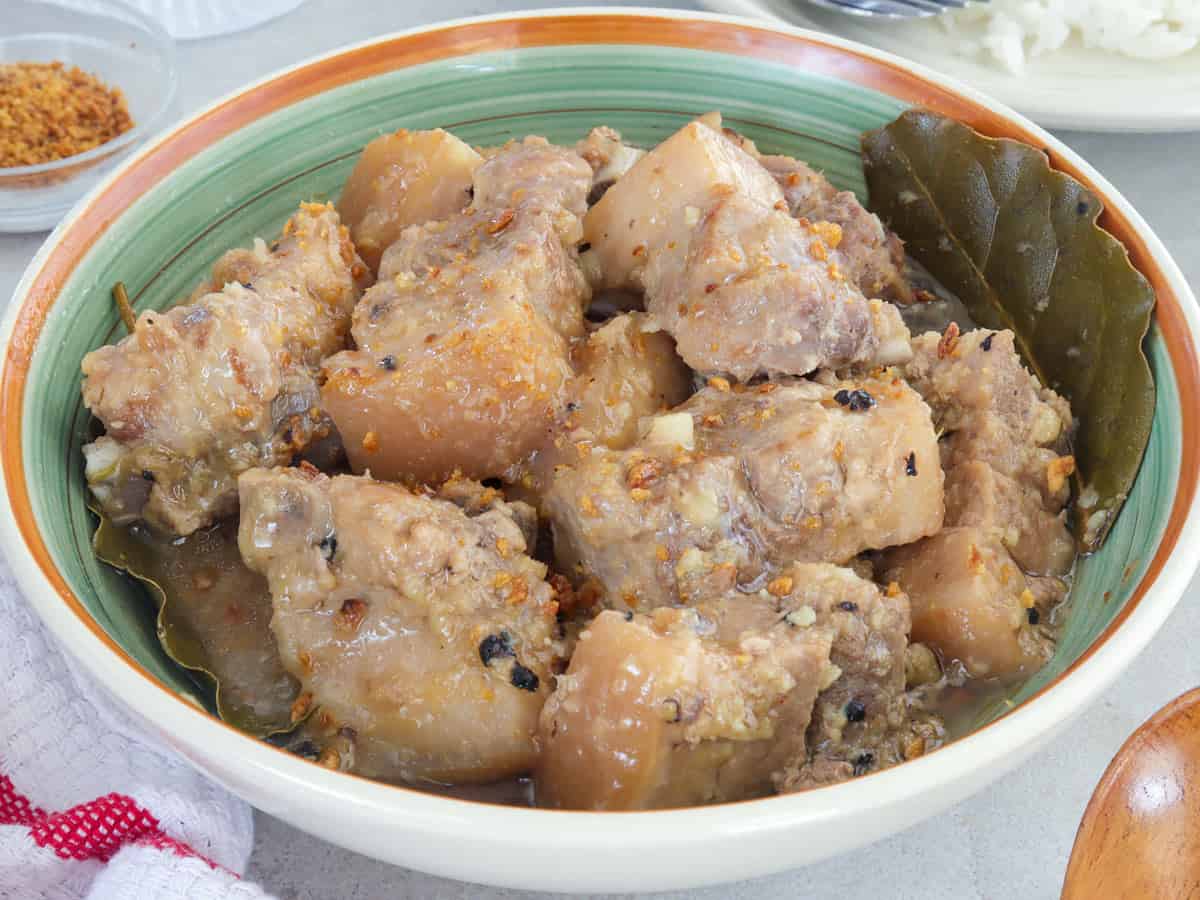
Although soy sauce is commonly used in adobo, salt is, in fact, the most traditionally authentic ingredient. Though not as widely known as its adobong itim counterpart, the white version is regarded as the closest version of the Pre-colonial adobo.
Early Filipinos stewed meat and poultry in vinegar and salt to preserve and extend the shelf life of food. However, with the advent of soy sauce from neighboring traders, it has replaced salt in adobo and has become synonymous with its cooking process.
I love the classic taste of soy sauce in adobo, and I also find adobong manok sa patis a tasty variation when I want to switch things up, but I have to say, I use salt more regularly to prepare the dish. Unlike the more robust soy sauce or fish sauce, salt has a more mellow taste and does not distract from the garlicky-vinegary flavors I like. White adobo is easy to make with pantry staples and is just as delicious with steamed rice!
Ingredient notes
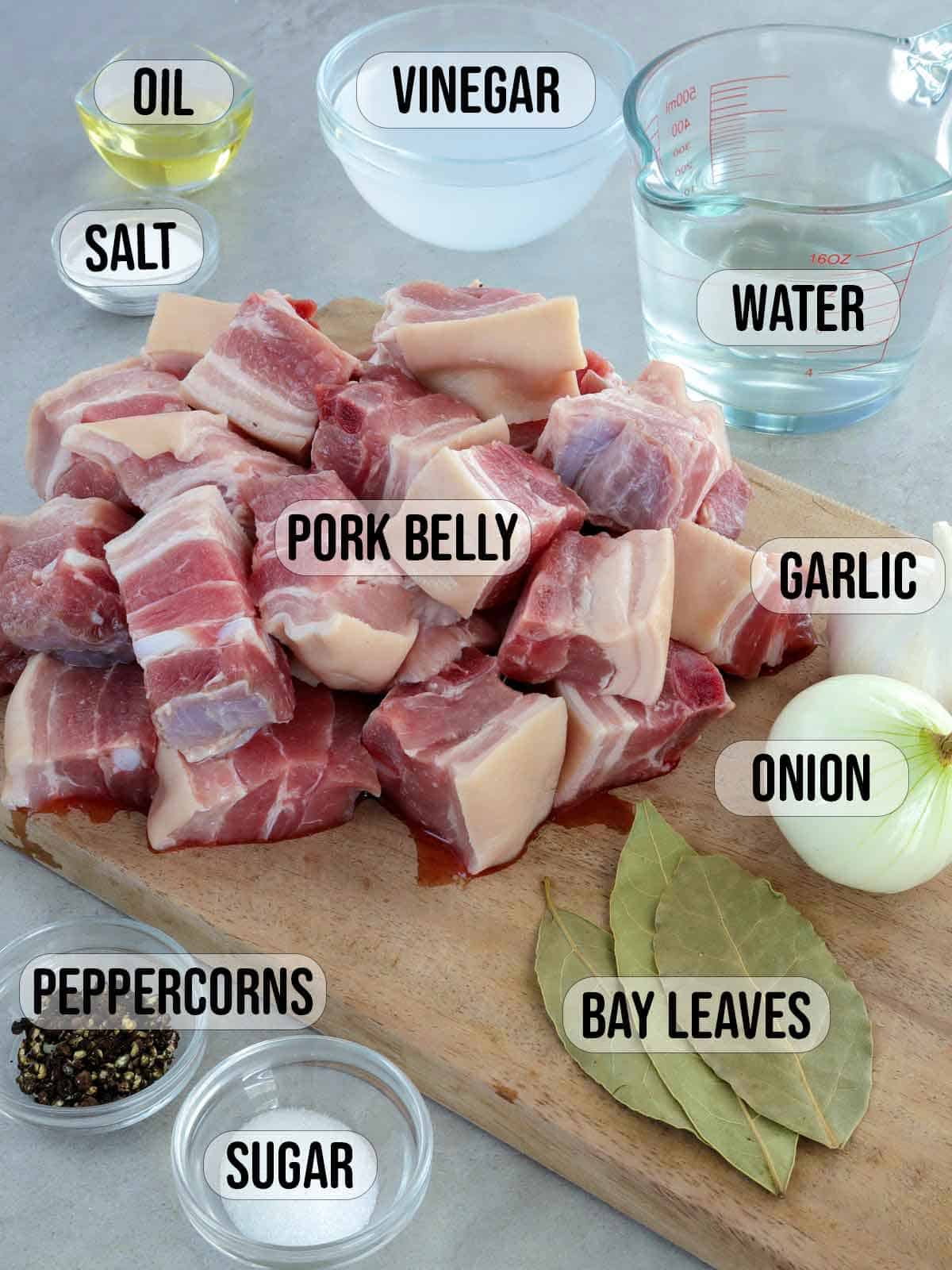
- Meat- The recipe uses pork belly, but pork shoulder, hocks, ribs, and bone-in chicken parts are also great options.
- Vinegar- cane or coconut variety is traditionally used. If unavailable, white distilled vinegar is a good substitute but may have a sharper tang. You can also use apple cider vinegar, which has a similar sourness to white vinegar but with a hint of sweetness and fruitiness.
- Aromatics- garlic, onions, peppercorns, and bay leaves help build flavor, adding depth and complexity.
- Salt- adds the primary flavor
- Sugar- The sweetness helps balance the dish's acidity and saltiness.
How to make Adobong Puti
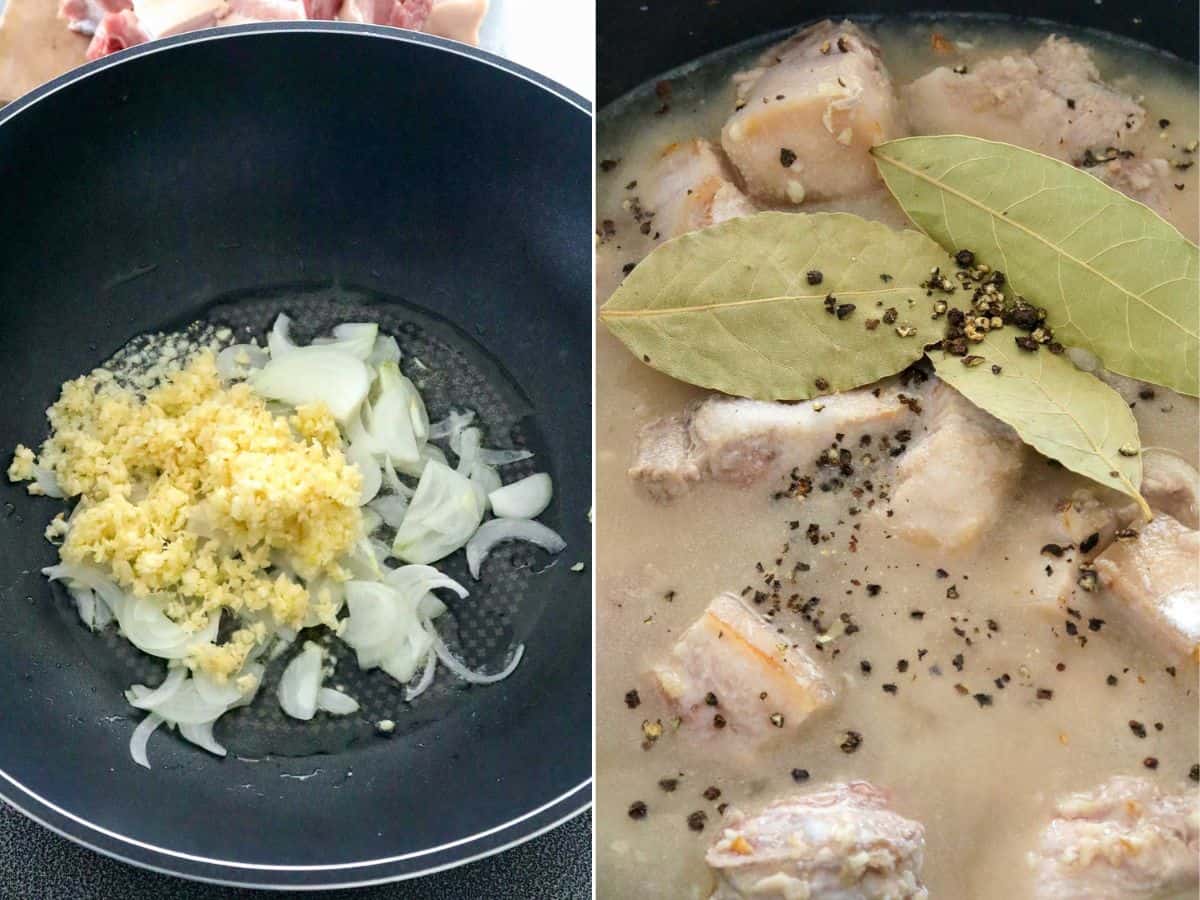
- Heat oil in a wide pan. Saute the onions and garlic until softened and aromatic. Add pork and cook until lightly browned.
- Pour in vinegar and boil uncovered and without stirring, for a few minutes before adding the other liquids to cook off the strong acid taste. Add water, salt, bay leaves, and peppercorns.
- Lower heat, cover, and simmer until the meat is fork-tender and liquid is reduced Add sugar to balance the flavors. Continue to cook, uncovered, until mixture begins to render fat.
Cooking tip
If you want to stretch the servings, add pan-fried potatoes or hard-boiled eggs.
Frequently Asked Questions
Should I sear the meat first?
Sear the meat until lightly browned to enhance flavor and add color.
What it is the difference between white adobo to regular adobo?
Adobong puti uses salt instead of vinegar so it has a pale color instead of dark. It has a more pronounced tart and garlicky taste.
How to serve and store
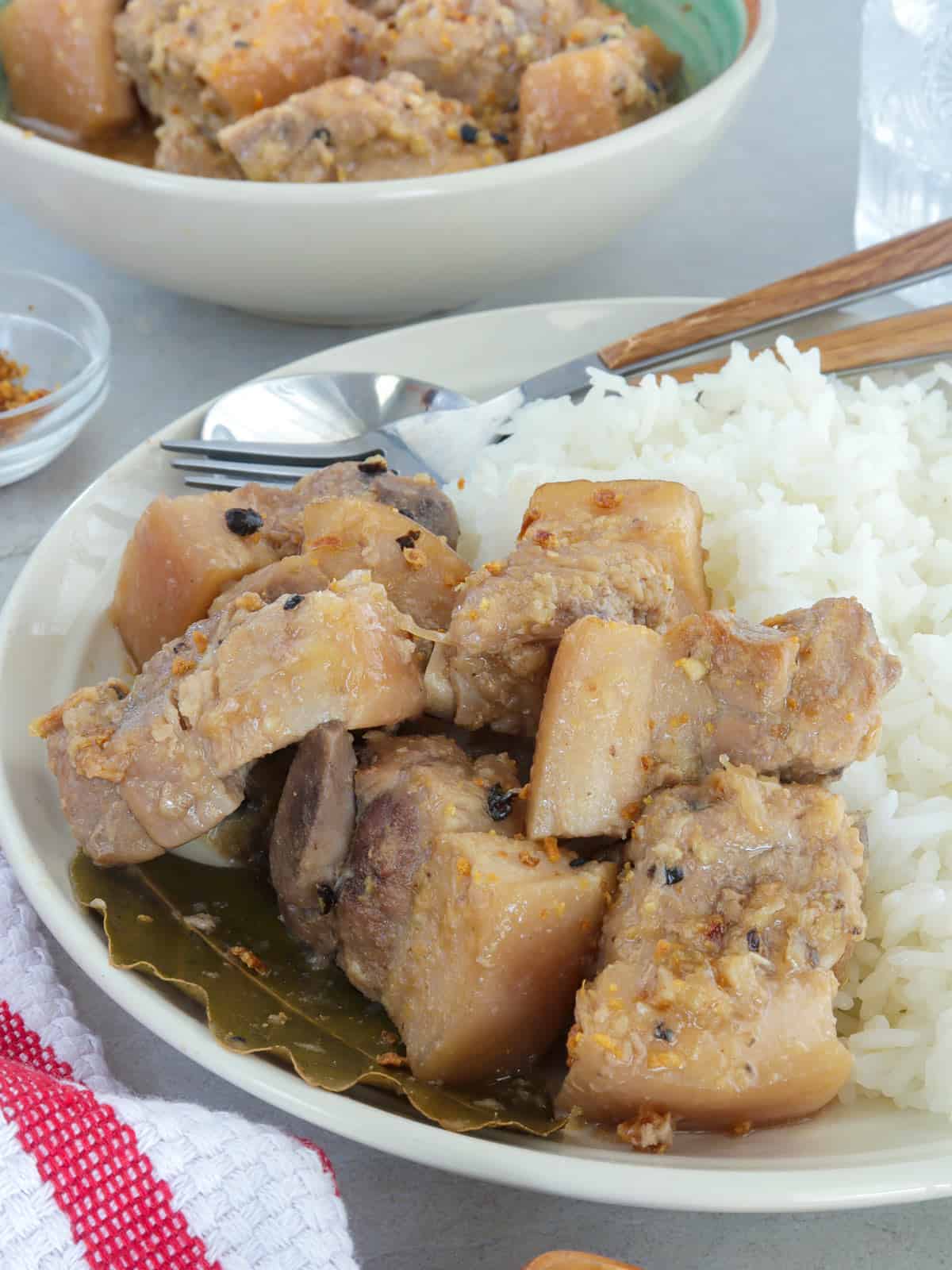
- Serve as a main dish with a side of steamed rice or sinangag for lunch or dinner. Garnish with fried garlic bits for added flavor, texture, and aroma.
- Shred and toss day-old cold-cooked rice with leftovers into delicious adobo rice for a hearty breakfast!
- Adobo is a fantastic make-ahead meal as it keeps and reheats well. Allow to cool completely and transfer to a container with a tight-fitting lid. Refrigerate for up to 3 days or freeze for up to 2 months.
- To reheat, place in a saucepan and heat to an internal temperature of 165°F.
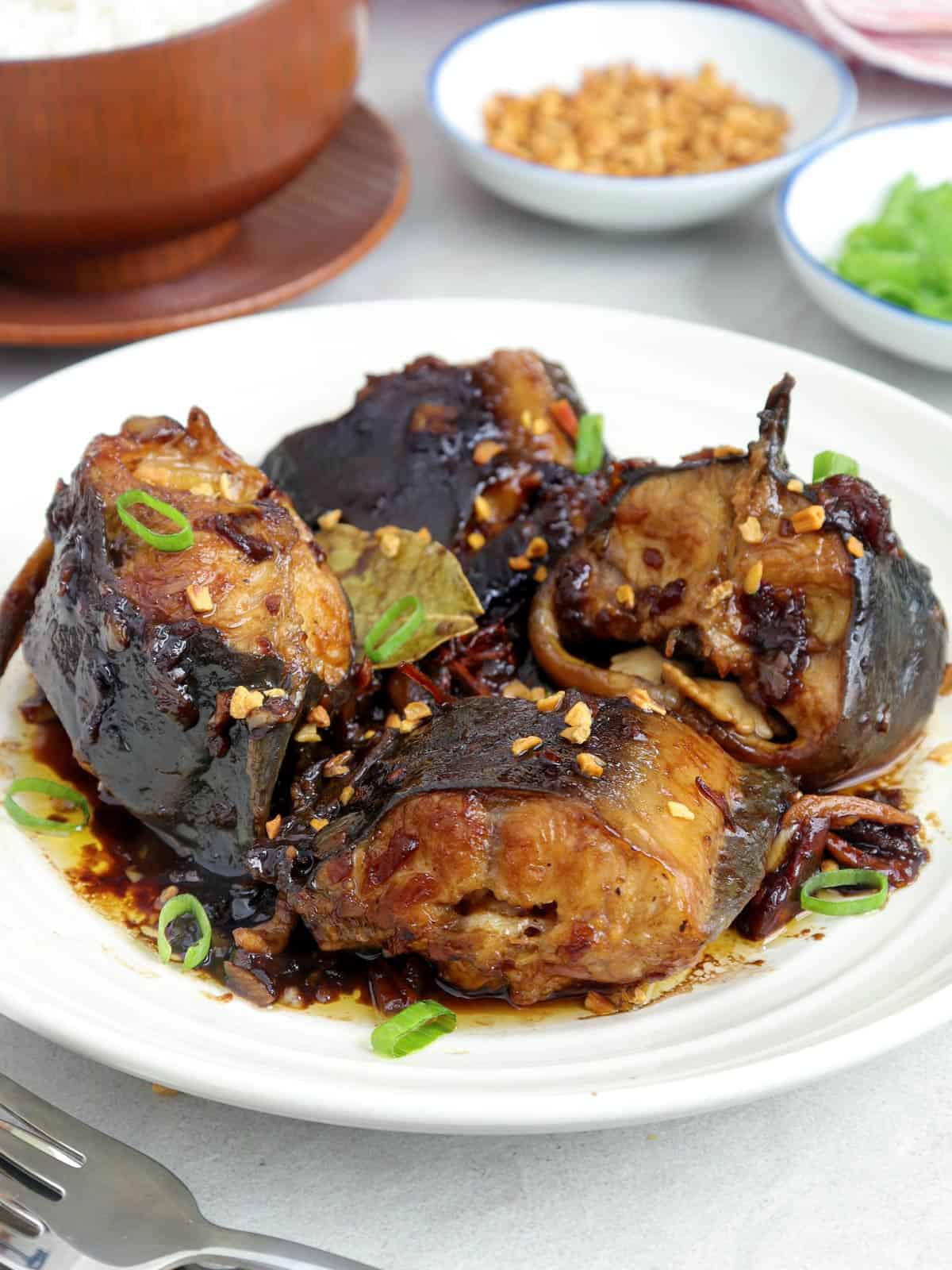
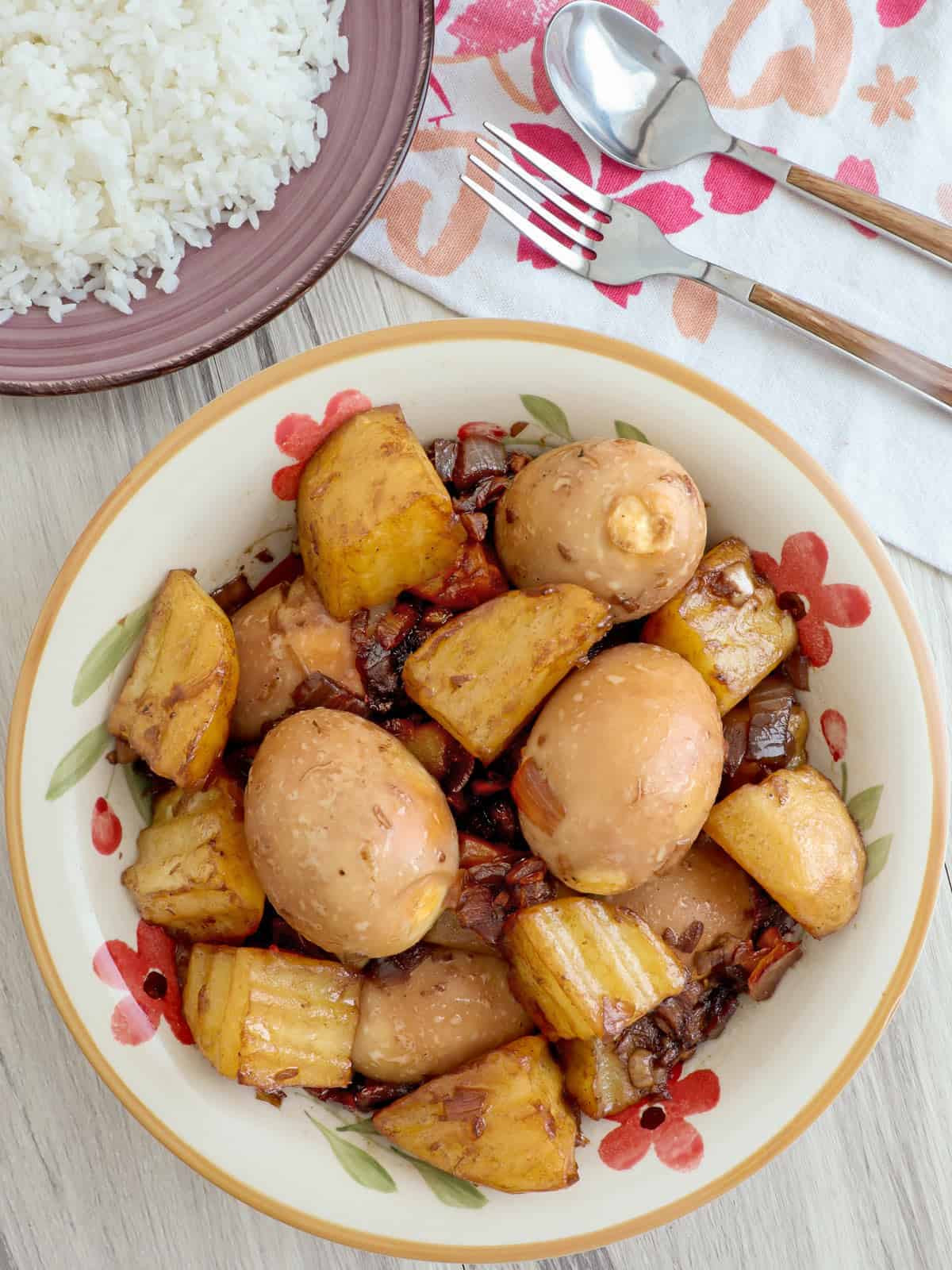
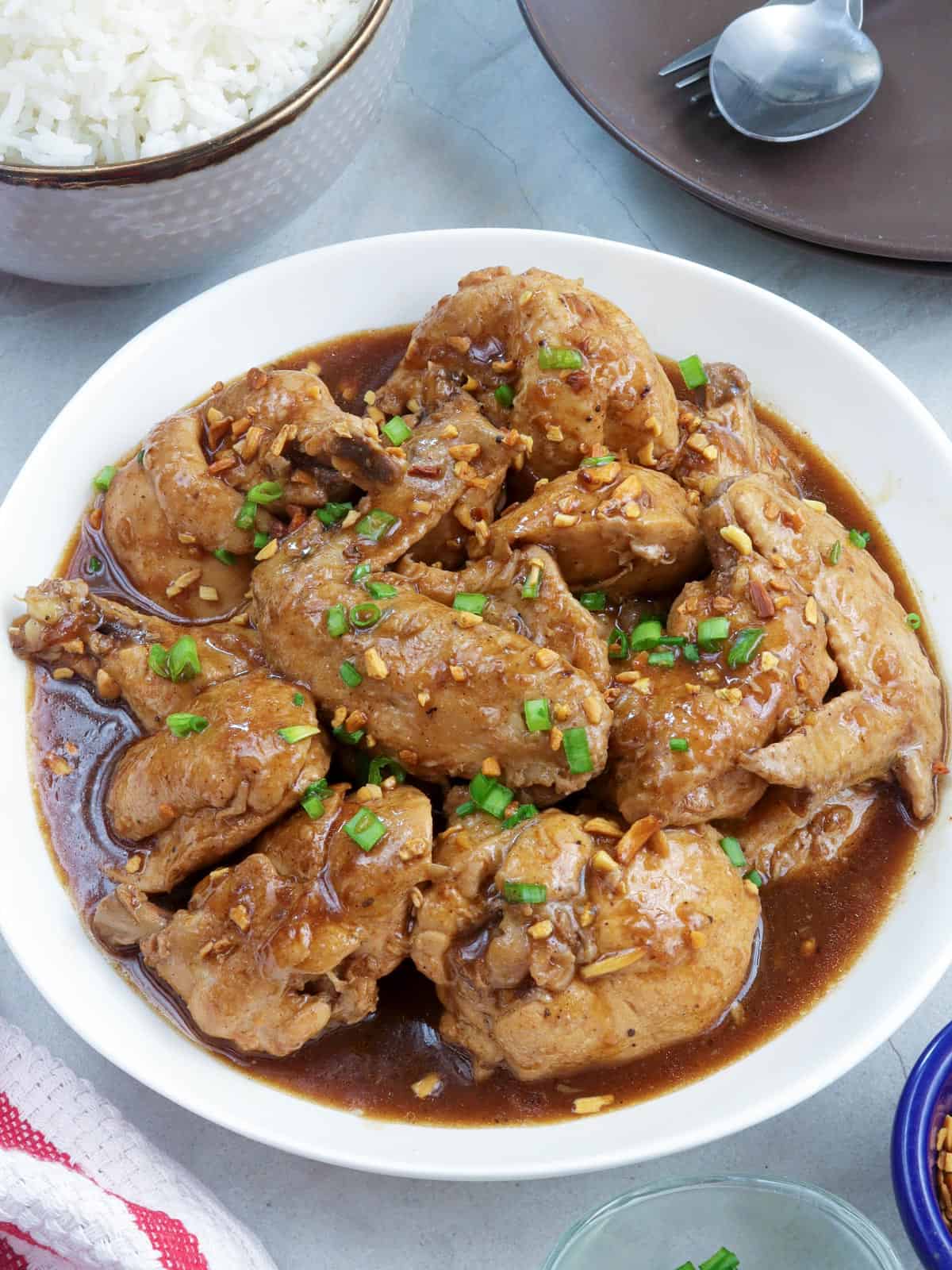
More adobo recipes
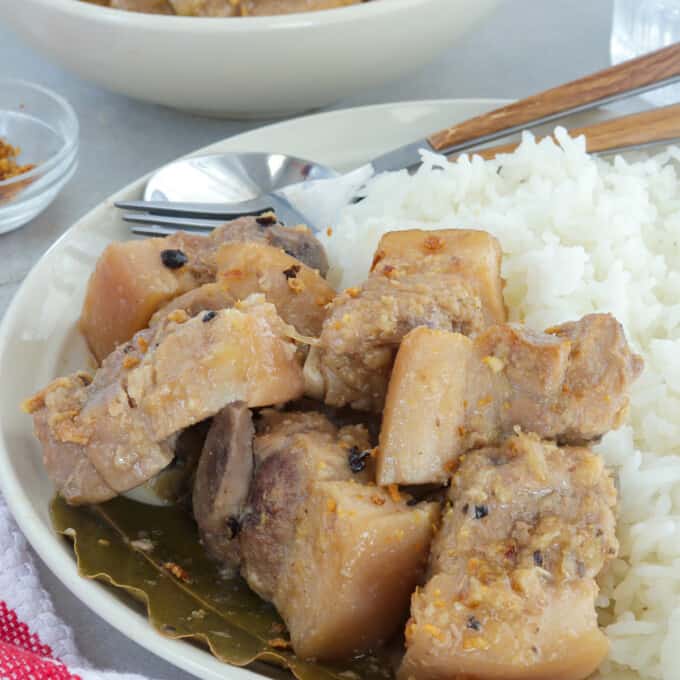
Ingredients
- 2 tablespoons oil
- 1 onion peeled and sliced thinly
- 1 head garlic peeled and minced
- 3 pounds pork belly
- 1 cup vinegar
- 1 ½ cups water
- 1 tablespoon salt
- 3 bay leaves
- 1 teaspoon peppercorns cracked
- 1 teaspoon sugar
- fried garlic bits optional
Instructions
- In a wide, heavy-bottomed pan over medium heat, heat oil. Add onions and garlic and cook, stirring regularly, until softened.
- Add pork and cook until lightly browned.
- Add vinegar and bring to a boil, uncovered and without stirring, for about 3 to 5 minutes.
- Add water, salt, bay leaves, and peppercorns. Stir to combine. Continue to boil for about 3 to 5 minutes.
- Lower heat, cover, and continue to cook for about 40 to 50 minutes or until meat is fork-tender and liquid is reduced.
- Add sugar and stir. Continue to cook, uncovered, until mixture begins to render fat.
- Sprinkle with fried garlic bits as desired and serve hot.
Notes
Nutrition Information
“This website provides approximate nutrition information for convenience and as a courtesy only. Nutrition data is gathered primarily from the USDA Food Composition Database, whenever available, or otherwise other online calculators.”
MARILYN SANTOS GABRIEL says
I love adobo in any kind of luto, lalo na yung nagmamantika ay.. Taob kaldero nyan . ❤️
MARILYN SANTOS GABRIEL says
I love adobo in any kind of luto
NERY CRUZ NAVELGAS says
The best content creator for me ❤️❤️❤️
Very generous and very kind person.
Flor Dela cruz says
Wow. Easy to prepare and so yummy.we'll surely love it!
MARILYN SANTOS GABRIEL says
Isa sa paboritong adobo
Flor Dela cruz says
Wow. Easy to prepare and so yummy.i live it
Lerie Landicho says
Sarap.... Mapaparami ng kain❤️
Jennie Castillo Jacob says
Delicious 😋
Thess says
another way to cook the adobo. thanks for sharing
Desiree says
Naging fave ko na tong adobo sa puti simula na try ko 🥰🥰🥰
Linda Sayson says
Thank you so much Kawaling Pinoy for the recipe, it's easy to follow and delicious 😋
Gina Caringal Malamug says
Subukan ko din po iluto itong adobong puti madalas kasi classic adobo lng niluluto namin 💝💝
John Fazzini says
Do you have a recipe for bittermellon?john
Mirachael Magsisi says
I love this adobong puti
JPG says
Ang arte sa canola oil. Pwede namang cooking oil na lang para pangmasa. 🤷
Mirachael Magsisi says
Mas healthy ang canola oil gamitin sa pagluluto
Jhun says
Very goood